This page contains affiliate links. If you purchase through them we may earn a small commission at no extra cost to you. Learn more
Fire-Starting Techniques That Actually Work in UK Weather
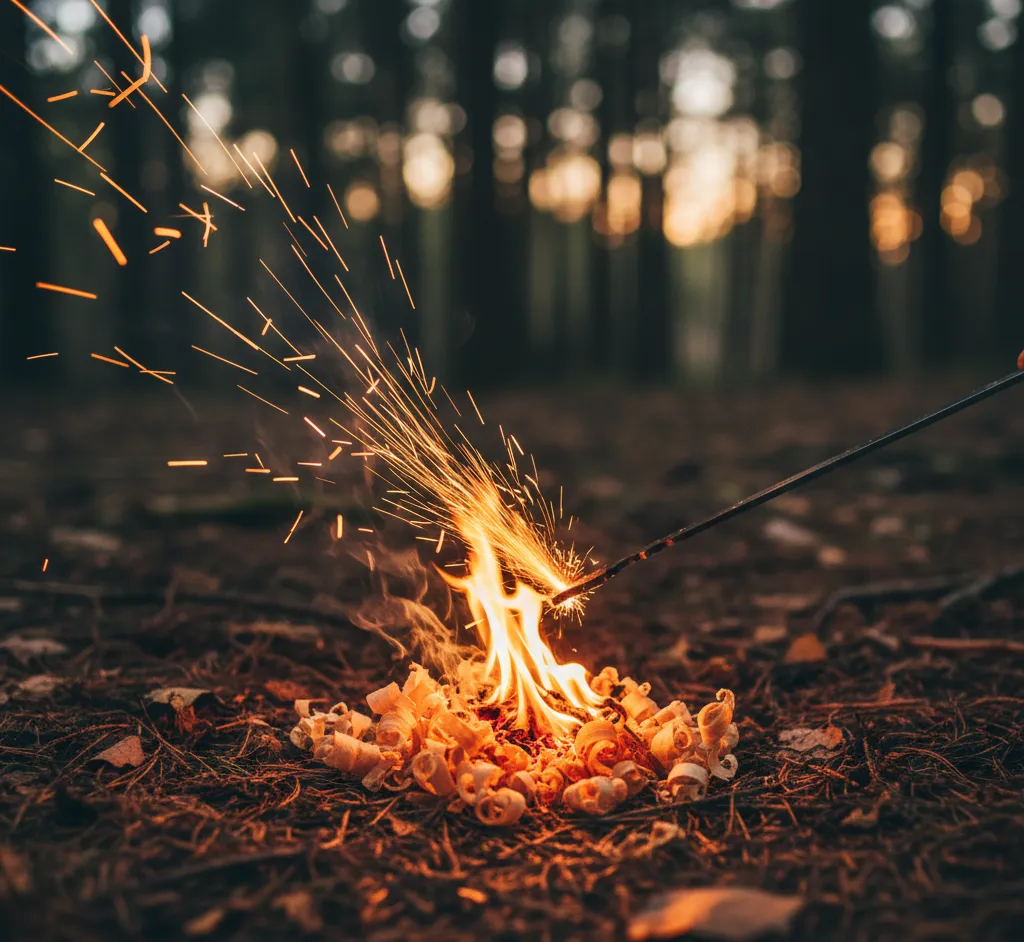
Fire-Starting Techniques That Actually Work in UK Weather
Starting a fire in the UK is a different beast from doing it in the Arizona desert. Here, you're battling damp air, wet wood, and drizzle that seems to appear from nowhere. But fire is arguably the most important bushcraft skill — it provides warmth, cooks food, purifies water, boosts morale, and dries out your soggy kit.
Let's go through the methods that actually work in British conditions.
The Holy Trinity of Fire
Every fire needs three things:
- Ignition source — what creates the spark or flame
- Tinder — fine, dry material that catches from a spark
- Fuel — progressively larger material that sustains the fire
Get any one of these wrong and you're blowing on a smoking pile of wet leaves wondering where it all went wrong.
Ignition Sources
Ferro Rod (Ferrocerium Rod)
The king of bushcraft fire-starting. A ferro rod throws sparks at around 3,000°C — hot enough to light most tinders even in damp conditions. They work when wet, last thousands of strikes, and don't run out of fuel.
How to use one properly:
- Hold the rod steady against your tinder bundle
- Draw the striker (or the spine of your knife) DOWN the rod, keeping the rod still
- Common mistake: pushing the rod away from the tinder, scattering your carefully prepared bundle everywhere
- Angle the sparks into the centre of your tinder
A decent ferro rod costs £8–£15 and will last years. It's the single best fire-starting investment you can make.
Fire Steel (Flint and Steel)
Traditional flint and steel produces cooler sparks than a ferro rod, so it needs char cloth or very fine tinder. It's a satisfying skill to learn but less practical as your primary method.
Matches and Lighters
Nothing wrong with carrying these as backup. Stormproof matches resist wind and rain better than standard ones. A cheap disposable lighter works brilliantly 99% of the time — just don't rely on it as your only option.
Carry at least two ignition sources. A ferro rod as your primary and a lighter as backup is a solid combination. Keep the lighter in a waterproof bag.
Tinder That Works in Wet UK Conditions
This is where most people struggle. Finding dry tinder in a soggy British woodland takes knowledge and practice.
Cotton Wool and Vaseline
The cheat code. Smear Vaseline into cotton wool balls and store them in a small waterproof container or zip-lock bag. They light instantly from a ferro rod spark, burn for 3–5 minutes, and are practically windproof. Prepare them at home and carry a dozen — they weigh nothing.
Feather Sticks
This is the core bushcraft tinder skill. Take a thumb-thick piece of dry wood and shave thin curls along its length with a sharp knife, leaving them attached. The curls catch sparks easily, and the stick itself becomes kindling.
The key: Use the dry inner wood of standing deadwood. Wood lying on the ground soaks up moisture like a sponge. Standing dead branches — snapped off the tree — are dry inside even after days of rain. Split them open and work with the inner wood.
Birch Bark
Silver birch bark contains oils that burn even when wet. Peel thin strips from fallen branches (never strip bark from living trees — it kills them). Scrunch it up loosely and it'll take a spark well.
Dried Bracken and Grass
In late summer and autumn, dead bracken makes excellent tinder. Crumble it fine and it catches easily. Dried grass works similarly but burns fast, so have your kindling ready.
Cramp Balls (King Alfred's Cakes)
These black, round fungi grow on ash trees and are a traditional British tinder. They catch a spark and smoulder slowly — perfect for carrying an ember. Not the easiest to light but brilliant once going.
Pine Resin
Scrape dried resin from conifer bark. It's nature's firelighter — highly flammable and water-resistant. Collect it when you see it and store it in a tin.
Building Your Fire: The Structure
The Lay
Prepare your fire site first:
- Clear the ground down to bare earth if possible
- Create a base of finger-thick sticks to keep your tinder off damp ground
- Arrange your tinder in a loose bundle in the centre
- Lean kindling (pencil-thin sticks) over the tinder in a tepee or lean-to shape
- Keep larger fuel ready but don't add it yet
Lighting Sequence
- Light your tinder with your ferro rod or ignition source
- Gently blow at the base — long, steady breaths, not sharp puffs
- As the kindling catches, add more pencil-thin sticks
- Gradually increase stick diameter: pencil → finger → thumb → wrist
- Don't rush. The most common mistake is piling on large wood before the fire is established
Fire Lays for UK Conditions
Lean-to fire: Best in wind. Build a small wall of logs on the windward side and lean your kindling against it. The wall reflects heat and blocks wind from your flames.
Log cabin fire: Stack alternating layers of sticks in a square, with tinder in the centre. Creates a stable structure with good airflow. Excellent for cooking as it burns down to a flat bed of embers.
Star fire: Arrange five or six logs in a star pattern pointing inward, with the fire in the centre. Push logs inward as they burn. Uses fuel efficiently and works well for a long-lasting camp fire.
Wet Weather Fire-Starting Strategy
When it's been raining for days (so, a normal Tuesday in the Lake District), follow this protocol:
- Find standing deadwood — snap branches off dead trees. The inside will be dry
- Split everything — use your knife to baton through sticks and expose dry inner wood
- Make feather sticks from the dry inner wood — at least three
- Use pre-prepared tinder — this is when your cotton wool and Vaseline earns its place
- Create a platform to keep your fire off wet ground
- Shelter your fire — use your body, a tarp, or natural shelter to block rain while it establishes
- Be patient — a wet-weather fire takes longer to build. Don't rush it
Only light fires where you have permission and it's safe to do so. Many UK woodlands restrict fires, and during dry spells there may be fire bans. Always check before you light up, and never leave a fire unattended.
Putting Your Fire Out
Just as important as starting it:
- Let it burn down to ash if possible
- Spread the embers and douse with water
- Stir the ash and douse again
- Check with the back of your hand — if it's too hot to touch, it's too hot to leave
- Replace any turf you removed
- Your fire site should be undetectable when you leave
Practice Makes Reliable
Fire-starting is a perishable skill. You can read about it all day, but until you've done it with cold, wet hands in fading light, you don't really know it.
Start practising in your garden. Time yourself. Try it in the rain. Build fires with one hand (in case you're injured). Make it boring through repetition — because when you actually need a fire, you want it to be routine, not a gamble.
Recommended Fire-Starting Kit
Get yourself a ferro rod, a bag of cotton wool balls, a tin of Vaseline, and a sharp knife. That's your starter kit. Everything else you can find in the woods.
Light My Fire Swedish FireSteel 2.0 Army
Amazon UK12,000+
3,000°C
50g
Pros
- +Works when wet
- +12,000+ strikes lifespan
- +Built-in emergency whistle
Cons
- −Requires practice to throw sparks accurately
The gold standard ferro rod. Reliable in all conditions and practically indestructible.
View dealAffiliate link — we may earn a small commission at no extra cost to you
UCO Stormproof Matches (25 pack)
Amazon UK15 seconds each
Yes
Yes
Pros
- +Burns in wind and rain
- +Relights after being submerged
- +15-second burn time per match
Cons
- −Limited supply — 25 per box
Brilliant backup ignition source. These genuinely burn in conditions that kill normal matches.
View dealAffiliate link — we may earn a small commission at no extra cost to you
Exotac nanoSTRIKER XL Ferro Rod
Amazon UK3,000+
3,000°C
34g
Pros
- +Tungsten carbide striker built in
- +Compact and pocketable
- +Replaceable ferro rod insert
Cons
- −Pricier than basic ferro rods
A premium, self-contained fire starter that fits on your keyring. Excellent for EDC and emergency kits.
View dealAffiliate link — we may earn a small commission at no extra cost to you
Ready to gear up?
Use our kit builder to get a complete packout list tailored to your trip type, terrain, and budget — with prices and buy links.
Related reading
Bushcraft & Survival Skills: The Complete UK Guide
A practical guide to bushcraft and survival skills for UK conditions — from fire-starting and shelter-building to navigation and wild food.
Campfire Cooking: A Practical Guide for UK Outdoors
How to cook over a campfire — pot hanging, foil wrapping, ember cooking, basic recipes, and fire safety for UK outdoor cooking.
Shelter Building Basics — A Practical Guide for UK Woodland
How to build emergency and practice shelters in UK woodland — lean-tos, A-frames, and debris shelters using natural materials.
Tool Maintenance & Sharpening Guide for UK Outdoors
How to sharpen knives, maintain axes, and care for outdoor tools. Step-by-step methods with essential UK knife law reminders included.