This page contains affiliate links. If you purchase through them we may earn a small commission at no extra cost to you. Learn more
Campfire Cooking: A Practical Guide for UK Outdoors
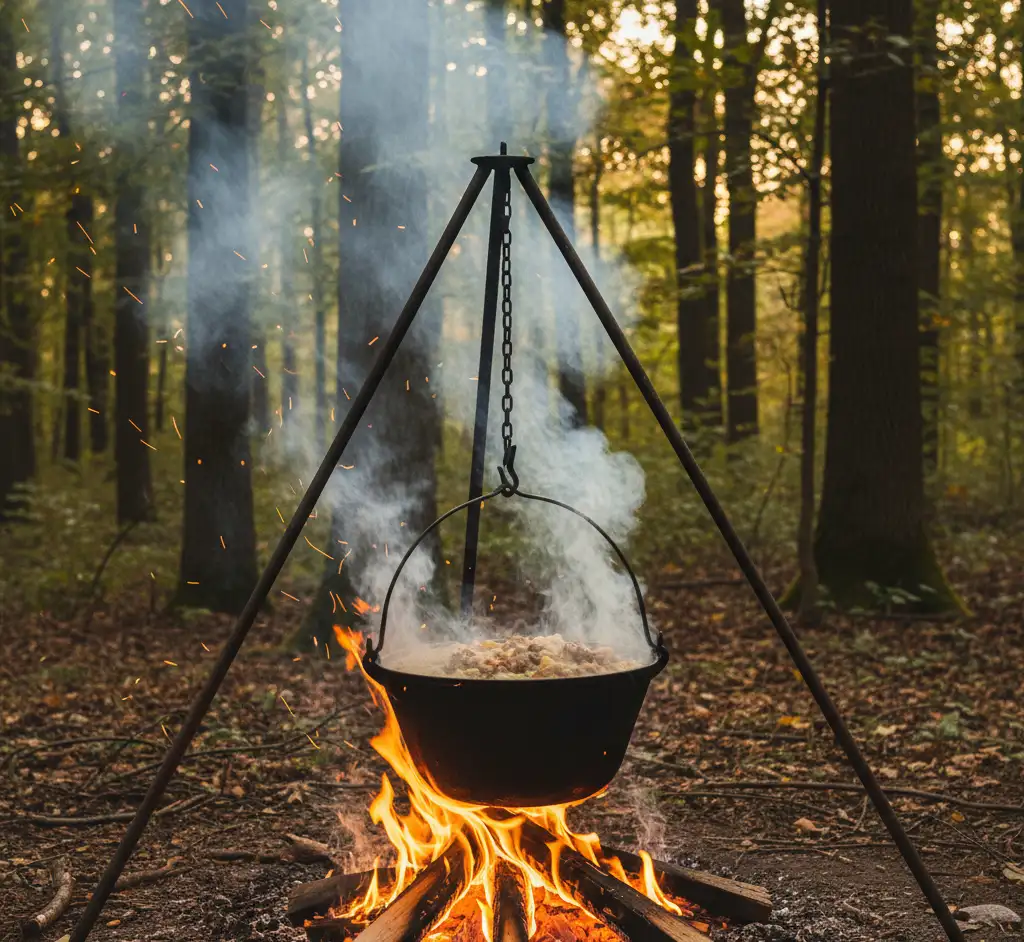
Campfire Cooking: A Practical Guide
There's something about food cooked over fire that a gas stove can never replicate. The smoky flavour, the ritual of tending the flames, the primal satisfaction of turning raw ingredients into a hot meal using skills that humans have used for thousands of years. It's also genuinely practical — if your stove fails, knowing how to cook over fire means you still eat well.
The Golden Rule: Embers, Not Flames
The biggest campfire cooking mistake is trying to cook over roaring flames. Flames are inconsistent, too hot, and will char the outside of your food while leaving the inside raw.
Instead:
- Build a good fire (see our fire-starting guide)
- Let it burn for 30–45 minutes
- Rake the embers into a cooking area
- Cook over the hot, glowing coals
Embers give you consistent, controllable heat — exactly what you need for cooking.
Cooking Methods
Direct Ember Cooking
The simplest method. Place food directly on or in the embers.
Works well for:
- Potatoes — wrap in foil, bury in embers, 45–60 minutes
- Corn on the cob — soak in water (husk on), place on embers, 15–20 minutes
- Bread — wrap dough around a stick ("damper bread") and hold over embers
- Peppers and onions — directly on coals, turning occasionally
Pot Hanging
Suspend a pot over the fire using a simple crane or tripod.
The adjustable crane:
- Drive a sturdy, forked stake into the ground near the fire
- Rest a long, green (living) pole in the fork, with one end weighted or staked
- Hang your pot from the extended end using a chain, wire, or green wood hook
- Adjust height by moving the pot along the pole or adjusting the fulcrum
Tripod: Three poles lashed together at the top, spread at the base, pot hung from the apex. More stable than a crane but less adjustable.
Quick and dirty method: Two forked sticks driven into the ground on either side of the fire, a cross pole resting in the forks, pot hung from the cross pole by a hook or wire.
Foil Wrapping
Heavy-duty aluminium foil is the campfire cook's best friend.
Basic foil packet:
- Lay out a large sheet of foil
- Place your ingredients in the centre
- Fold the foil over and crimp the edges tightly — you want a sealed packet
- Double-wrap for extra protection against burning through
- Place on embers and cook, turning occasionally
Great foil packet meals:
- Sausages with sliced onion and peppers — 20 minutes
- Fish with lemon, garlic, and herbs — 15–20 minutes
- Diced potato with butter and seasoning — 30–40 minutes
- Banana with chocolate chips — 10 minutes (dessert sorted)
Grilling
A metal grill grate placed over embers works exactly like a barbecue. If you don't have a grate, lay green (living) sticks side by side across two log rails — they won't burn through quickly over embers.
Good for:
- Sausages, burgers, steaks
- Bread and flatbreads
- Vegetables
- Toast (the simple pleasures)
Stick Cooking
The classic. Thread food onto a sharpened green stick and hold it over the embers.
Works for:
- Sausages (the universal campfire food)
- Marshmallows (obviously)
- Damper bread (dough spiralled around a stick)
- Chunks of meat or halloumi
Use green (living) wood — dead, dry wood will catch fire. Hazel makes excellent cooking sticks.
Always use green (living) wood for any cooking structures that go near the fire — cross poles, cooking sticks, grill supports. Green wood resists burning long enough to cook your meal. Dead wood will catch fire and drop your dinner in the ashes.
Simple Campfire Recipes
One-Pot Stew
Ingredients: Diced meat or sausages, chopped onion, chopped carrots, diced potatoes, stock cube, water, salt and pepper.
- Brown the meat in the pot with a little oil
- Add onions and cook until soft
- Add carrots, potatoes, stock cube, and enough water to cover
- Hang over the fire and simmer for 45–60 minutes
- Season to taste
Pre-chop vegetables at home and carry them in a zip-lock bag to save time and washing up.
Campfire Chilli
Ingredients: Minced beef (or a tin of beans for veggie), tinned tomatoes, kidney beans, chilli powder, onion, garlic.
- Brown mince and onion in the pot
- Add tinned tomatoes, drained beans, chilli powder, and garlic
- Simmer over embers for 30–40 minutes
- Serve with rice (cooked in a separate pot) or bread
Damper Bread
Ingredients: Self-raising flour, pinch of salt, water.
- Mix flour, salt, and just enough water to form a stiff dough
- Wrap dough in a spiral around a thick green stick
- Hold over embers, turning slowly, for 10–15 minutes until golden and cooked through
- Slide off the stick and fill with butter, jam, or whatever you fancy
Bannock
Ingredients: Plain flour, baking powder, salt, butter or oil, water.
- Mix dry ingredients, rub in butter
- Add water to make a firm dough
- Flatten into a disc about 2 cm thick
- Cook on a hot flat stone near the fire, or in a pan, turning once. About 10 minutes each side
Foil Baked Apples
Ingredients: Apples, brown sugar, butter, cinnamon.
- Core the apples
- Fill the cavity with sugar, a knob of butter, and cinnamon
- Wrap tightly in foil
- Place in embers for 20–30 minutes
- Unwrap carefully (steam!) and enjoy
Fire Safety
Campfire cooking requires extra vigilance:
- Clear the area — remove dry leaves, grass, and debris within 2 metres of the fire
- Keep water nearby — always have a pot of water or a water bottle ready to douse flames
- Watch the wind — sparks can travel. If it's very windy, reconsider having a fire at all
- Don't leave it unattended — ever. Not even for a minute
- Contain the fire — use a fire pit if possible, or ring the fire with stones
- Keep it small — you don't need a bonfire to cook. A small fire with good embers is ideal
- Mind your clothing — synthetic fabrics melt. Wear cotton or wool near fires
Only cook over fire where fires are permitted. Many UK woodland sites, national parks, and campsite areas restrict open fires. During dry conditions, fire bans may be in place. Always check before lighting up, and carry a stove as backup.
Washing Up in the Wild
- Scrape food waste into a bag to carry out (leave no trace)
- Heat water for washing — warm water cleans better than cold
- Use biodegradable soap sparingly, and wash at least 30 metres from any water source
- Strain dirty wash water and scatter it widely, away from water sources
- Dry kit thoroughly before packing to prevent mildew
Essential Cooking Kit
You don't need much:
- A lightweight pot (stainless steel or titanium) — 1 litre minimum for solo, 2 litres for two people
- A wooden spoon or lightweight utensil
- Heavy-duty aluminium foil — several sheets, pre-folded
- A sharp knife (see our tool maintenance guide)
- A mug — for tea. Non-negotiable
- Wire or a chain — for pot hanging (or improvise from green wood)
- Zip-lock bags — for pre-prepared ingredients and waste
Recommended Campfire Cooking Kit
You don't need to spend a fortune. A decent pot, a tripod, and some foil covers 90% of campfire cooking.
Olicamp Space Saver Mug & Pot Set
Amazon UK1L pot + 0.5L mug
Stainless steel
340g
Pros
- +Stainless steel handles campfire heat
- +Mug nests inside pot
- +Folding handle locks securely
Cons
- −Heavier than titanium options
A reliable, fire-friendly cooking set. Stainless steel doesn't care about campfire abuse.
View dealAffiliate link — we may earn a small commission at no extra cost to you
Campfire Tripod Chain & Hook (Adjustable)
Amazon UKSteel chain with S-hook
1m adjustable
300g
Pros
- +Height-adjustable for temperature control
- +Works with any pot that has a bail handle
- +Simple and virtually indestructible
Cons
- −Needs three poles or a tripod frame
Combined with three green poles, this gives you a proper adjustable cooking setup over any campfire.
View dealAffiliate link — we may earn a small commission at no extra cost to you
BCB Crusader Metal Mug & Cooker
Amazon UK750ml
Stainless steel
200g
Pros
- +Doubles as mug, pot, and stove
- +Military proven design
- +Compact and nesting
Cons
- −Small capacity — solo use only
A British military classic. Perfect for solo campfire brews and simple one-pot meals.
View dealAffiliate link — we may earn a small commission at no extra cost to you
Campfire cooking is one of the most enjoyable parts of bushcraft. It takes practice to manage heat, timing, and multi-course meals over embers, but even your first attempt will produce something satisfying. And honestly, everything tastes better outdoors.
Ready to gear up?
Use our kit builder to get a complete packout list tailored to your trip type, terrain, and budget — with prices and buy links.
Related reading
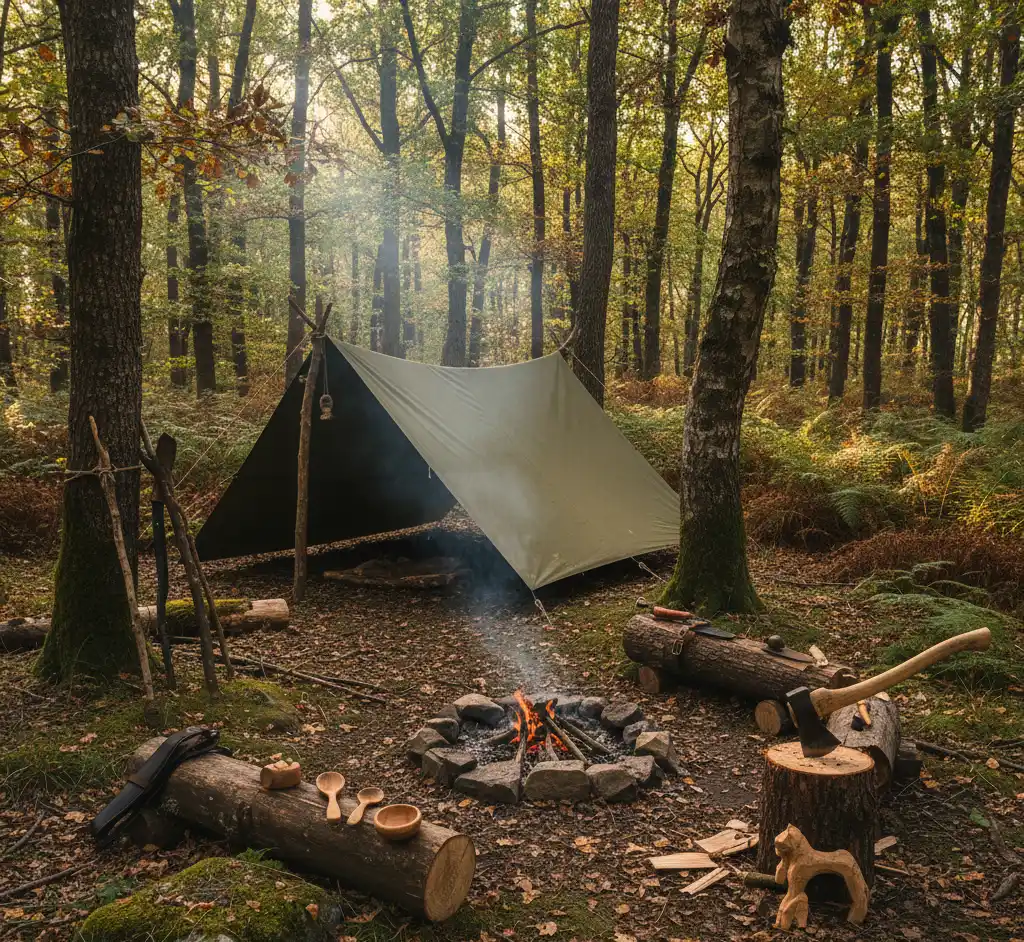
Bushcraft & Survival Skills: The Complete UK Guide
A practical guide to bushcraft and survival skills for UK conditions — from fire-starting and shelter-building to navigation and wild food.
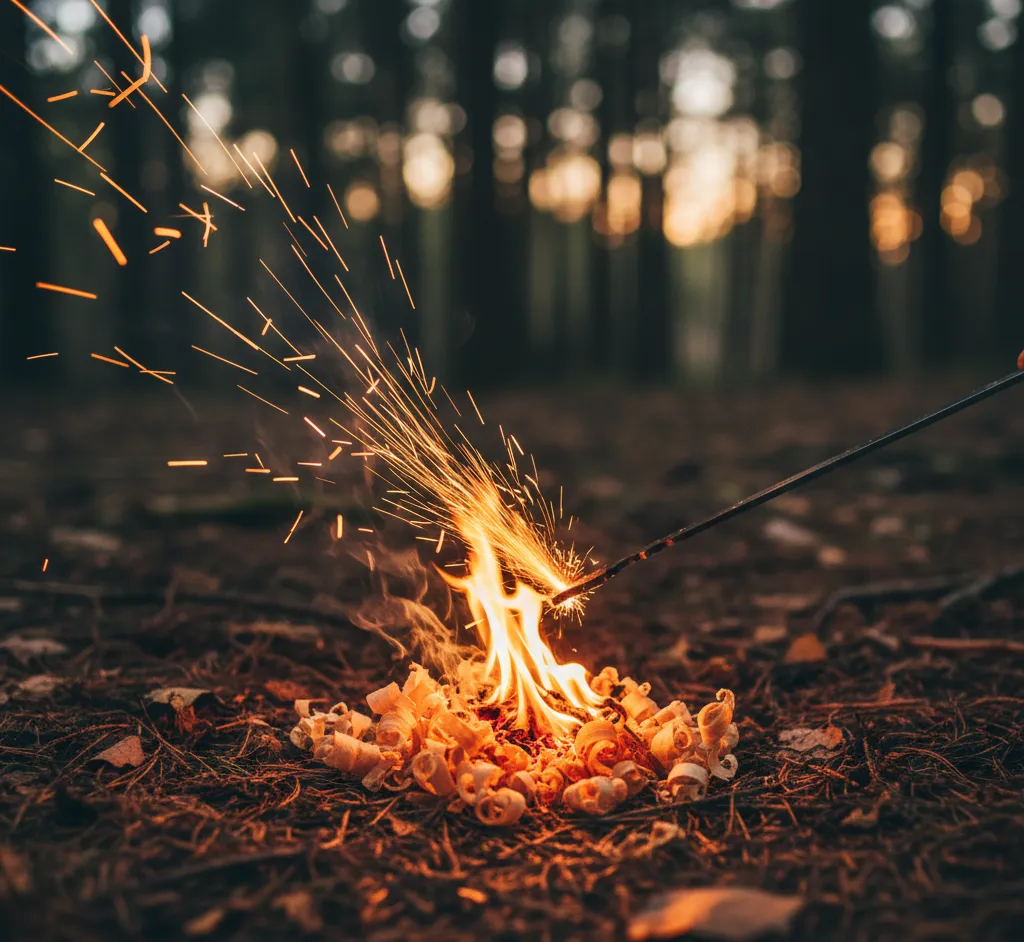
Fire-Starting Techniques That Actually Work in UK Weather
Proven fire-starting methods for wet UK conditions — ferro rods, fire steel, natural tinders, and techniques that work when everything's damp.
Leave No Trace: 7 Principles for UK Outdoor Enthusiasts
The 7 Leave No Trace principles adapted for UK conditions. Why they matter, how to follow them properly, and common mistakes to avoid.
Tool Maintenance & Sharpening Guide for UK Outdoors
How to sharpen knives, maintain axes, and care for outdoor tools. Step-by-step methods with essential UK knife law reminders included.