This page contains affiliate links. If you purchase through them we may earn a small commission at no extra cost to you. Learn more
Tool Maintenance & Sharpening Guide for UK Outdoors
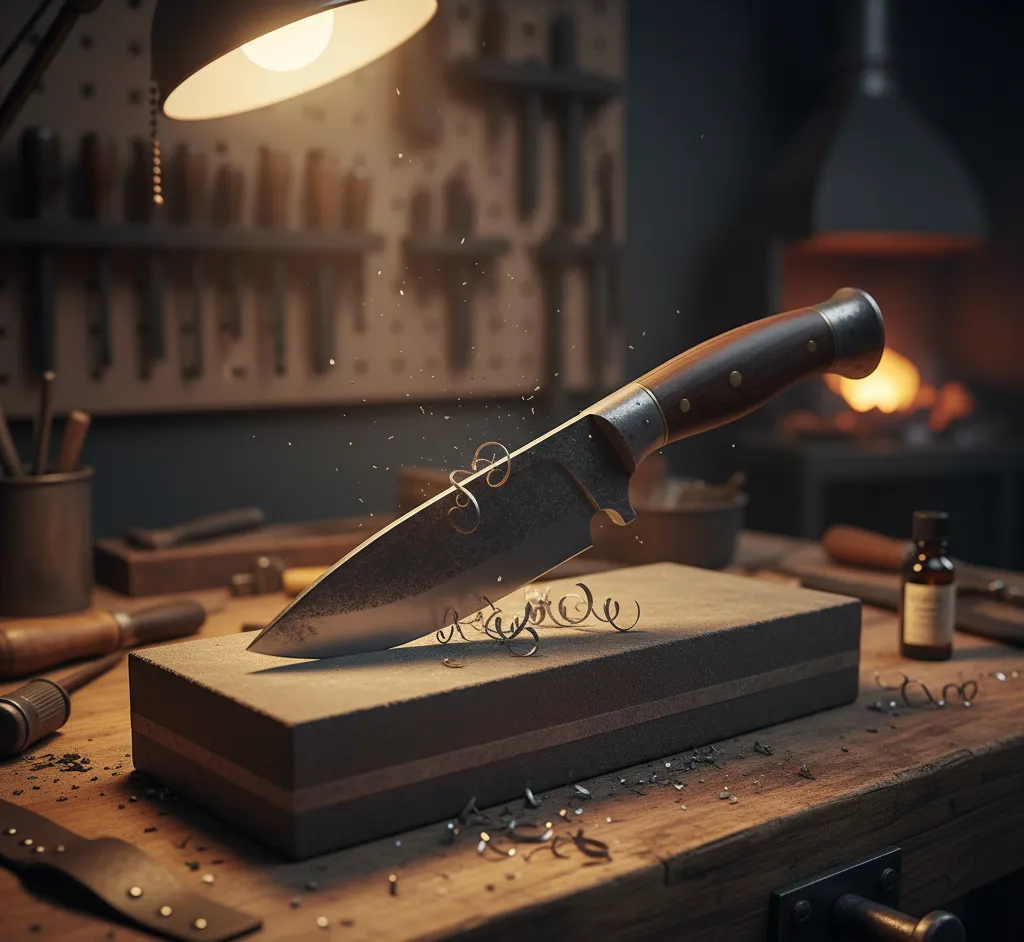
Tool Maintenance & Sharpening for the Outdoors
A sharp knife is a safe knife. A dull one requires more force, is more likely to slip, and does a worse job. The same goes for axes, saws, and every other edge tool you carry outdoors. Learning to maintain your tools properly means they work better, last longer, and are safer to use.
UK Knife Law: Know It Before You Carry
Before we talk about maintenance, let's talk about the law. This matters.
The Basics
Legal to carry without a reason:
- A folding knife (non-locking) with a blade of 3 inches (7.62 cm) or less
Requires a "good reason" to carry:
- Any fixed-blade knife (regardless of size)
- Any locking knife (regardless of size)
- Any knife with a blade longer than 3 inches
"Good reason" includes:
- Using it for work (a chef carrying kitchen knives, a tradesperson with a Stanley knife)
- Going to or from a bushcraft course or outdoor activity
- Religious reasons (Sikh kirpan)
- It does NOT include "self-defence" or "I might need it"
Practical Advice
If you're heading to the woods for bushcraft, carrying a fixed-blade knife in your rucksack is fine — that's a legitimate reason. Carrying the same knife in your jacket pocket walking through town is not.
- Keep fixed-blade knives in your pack during travel, not on your belt
- Transport them directly — home to woodland, woodland to home
- If questioned by police, be calm, explain what you're doing, and show the knife is packed away safely
UK knife law is strict and carries serious penalties — up to 4 years in prison for carrying an offensive weapon. Take it seriously. Always have a genuine, specific reason for carrying anything beyond a small folding knife, and keep knives packed away during transport.
Knife Sharpening
Understanding the Edge
A knife edge is a V-shape when viewed end-on. The angle of that V determines the character of the edge:
- 15–20° (per side) — very sharp, fine edge. Good for carving and food prep. Dulls faster on hard materials
- 20–25° — the general-purpose outdoor range. Good balance of sharpness and durability
- 25–30° — tougher edge. Better for batoning wood and heavy tasks. Won't be razor sharp but holds up well
Most outdoor knives work best at 20–25° per side. Don't try to put a razor edge on a bushcraft knife — it'll dull almost immediately in the field.
Sharpening with a Whetstone
What you need: A small, dual-grit whetstone (coarse/fine). A pocket-sized one is fine for field use.
The process:
- Wet or oil the stone (depending on stone type — water stones use water, oil stones use oil)
- Find your angle — hold the knife edge against the stone, then raise the spine until you're at roughly 20–25°. A useful trick: a 20° angle is roughly two coins' thickness under the spine
- Stroke the blade across the stone, edge leading, as if you're trying to shave a thin layer off the stone
- Maintain consistent angle — this is the most important thing. An inconsistent angle rounds the edge rather than sharpening it
- Work one side, then the other. Equal strokes on each side
- Start on the coarse side if the knife is dull, then finish on the fine side
- Test the edge — it should catch on your thumbnail when drawn lightly across it
Sharpening with a Diamond Sharpener
Diamond sharpeners (credit-card-sized or small rods) are lighter and easier to carry than whetstones. The process is the same — consistent angle, equal strokes, edge leading.
Popular options include DMT and Fallkniven diamond sharpeners. They're more expensive than whetstones but last longer and work on harder steels.
Stropping
After sharpening, stropping removes the microscopic wire edge (burr) left by the stone. You can use:
- A leather strop (traditional)
- The back of a leather belt
- A flat piece of smooth wood (works surprisingly well)
Draw the blade backward (spine first, edge trailing) along the strop. Alternate sides. 10–20 strokes per side.
The key to sharpening is consistency, not pressure. Light, even strokes at a constant angle will produce a better edge than heavy, inconsistent grinding. Let the stone do the work.
Axe Maintenance
Sharpening an Axe
An axe has a more convex edge than a knife — don't try to put a flat grind on it.
- Secure the axe — clamp it or rest it safely so it won't move
- Use a file or coarse sharpener — work in circular motions on the edge
- Maintain the existing bevel — follow the factory grind
- Work both sides equally
- Finish with a finer grit for a polished edge
- Strop if desired
Protecting the Head
- Dry it after use — especially in UK conditions. Steel rusts fast in damp air
- Apply a thin coat of oil (camellia oil, WD-40, or even cooking oil at a push) after each use
- Use a sheath or mask — protects the edge and protects you
- Don't leave it in wet grass — even a few hours can start surface rust
Handle Care
- Check the handle for cracks regularly
- If the head is loose, soak the handle in water to swell the wood (temporary fix) or re-wedge it properly
- Oil wooden handles with linseed oil once or twice a year
- Never use an axe with a loose head — it's genuinely dangerous
Saw Maintenance
Folding saws (like Bahco or Silky) are increasingly popular for bushcraft. They need less maintenance than axes but still benefit from care:
- Keep the blade clean — sap builds up and creates drag. Clean with warm soapy water or a solvent
- Dry after use — same as any steel tool
- Don't force the cut — let the teeth do the work. Forcing can bend or break teeth
- Replace the blade when teeth are dull — most folding saws have replaceable blades, and they're cheap (£8–£15)
- Store folded with a light coat of oil on the blade
Field Maintenance Kit
A practical field maintenance kit weighs very little:
- Small whetstone or diamond sharpener — pocket-sized
- Small bottle of oil — 30ml is plenty. Camellia oil is ideal
- Cloth or rag — for cleaning and oiling
- Leather strop — optional but nice to have
Total weight: under 200g. Total cost: under £20. No excuse not to carry it.
Maintenance Schedule
After Every Use
- Wipe the blade clean
- Dry thoroughly
- Light coat of oil on metal parts
- Quick strop to maintain the edge
Weekly (If Using Regularly)
- Full sharpening session on a whetstone
- Check handles for damage
- Clean sap and dirt from blades
- Oil wooden handles
Before Storage
- Thorough clean
- Full sharpen
- Heavy coat of oil on all metal
- Store in a dry place, in sheaths
- Loosen any leather sheaths (tight leather can hold moisture against steel)
Common Mistakes
- Inconsistent sharpening angle — this is the number one problem. Practice maintaining a steady angle
- Removing too much metal — you're sharpening, not re-profiling. Light strokes, minimal material removal
- Neglecting the other side — always sharpen both sides equally
- Leaving tools wet — UK humidity means rust starts fast. Dry and oil every time
- Using the wrong tool for the job — batoning with a thin knife, chopping with a hatchet that's too light. Use the right tool and it'll last
Recommended Sharpening and Maintenance Kit
A pocket-sized sharpening setup weighs nothing and keeps your tools performing properly all trip.
Fallkniven DC4 Diamond/Ceramic Sharpener
Amazon UKDiamond (coarse) and ceramic (fine)
32 x 100mm
60g
Pros
- +Two grits in one pocket-sized stone
- +Diamond side handles hard steels easily
- +Ceramic side produces a polished edge
Cons
- −Small surface area — slower on large blades
The field sharpener most experienced bushcrafters carry. Compact, effective, and works on any steel.
View dealAffiliate link — we may earn a small commission at no extra cost to you
Camellia Oil Knife Maintenance (100ml)
Amazon UK100ml
Food-safe plant oil
Blades, axes, tools
Pros
- +Food-safe — won't contaminate cooking tools
- +Prevents rust on carbon steel
- +Traditional Japanese blade care oil
Cons
- −Small bottle — but 100ml lasts ages
The proper way to protect carbon steel. A few drops after each use prevents UK-humidity rust.
View dealAffiliate link — we may earn a small commission at no extra cost to you
Lansky Puck Dual-Grit Sharpener
Amazon UK120 (coarse) / 280 (medium)
Round puck
200g
Pros
- +Perfect for axes and larger tools
- +Ergonomic grip for circular sharpening
- +Dual grit covers most sharpening needs
Cons
- −Too coarse for fine knife edges — use for axes and rough work
The go-to axe sharpener. The puck shape is designed for convex axe edges.
View dealAffiliate link — we may earn a small commission at no extra cost to you
Look after your tools and they'll look after you. A well-maintained knife, a sharp axe, and a clean saw make every bushcraft task easier, safer, and more enjoyable.
Ready to gear up?
Use our kit builder to get a complete packout list tailored to your trip type, terrain, and budget — with prices and buy links.
Related reading
Bushcraft & Survival Skills: The Complete UK Guide
A practical guide to bushcraft and survival skills for UK conditions — from fire-starting and shelter-building to navigation and wild food.
Fire-Starting Techniques That Actually Work in UK Weather
Proven fire-starting methods for wet UK conditions — ferro rods, fire steel, natural tinders, and techniques that work when everything's damp.
Campfire Cooking: A Practical Guide for UK Outdoors
How to cook over a campfire — pot hanging, foil wrapping, ember cooking, basic recipes, and fire safety for UK outdoor cooking.

Leave No Trace: 7 Principles for UK Outdoor Enthusiasts
The 7 Leave No Trace principles adapted for UK conditions. Why they matter, how to follow them properly, and common mistakes to avoid.