This page contains affiliate links. If you purchase through them we may earn a small commission at no extra cost to you. Learn more
Reading Weather Signs: A Complete UK Outdoor Guide
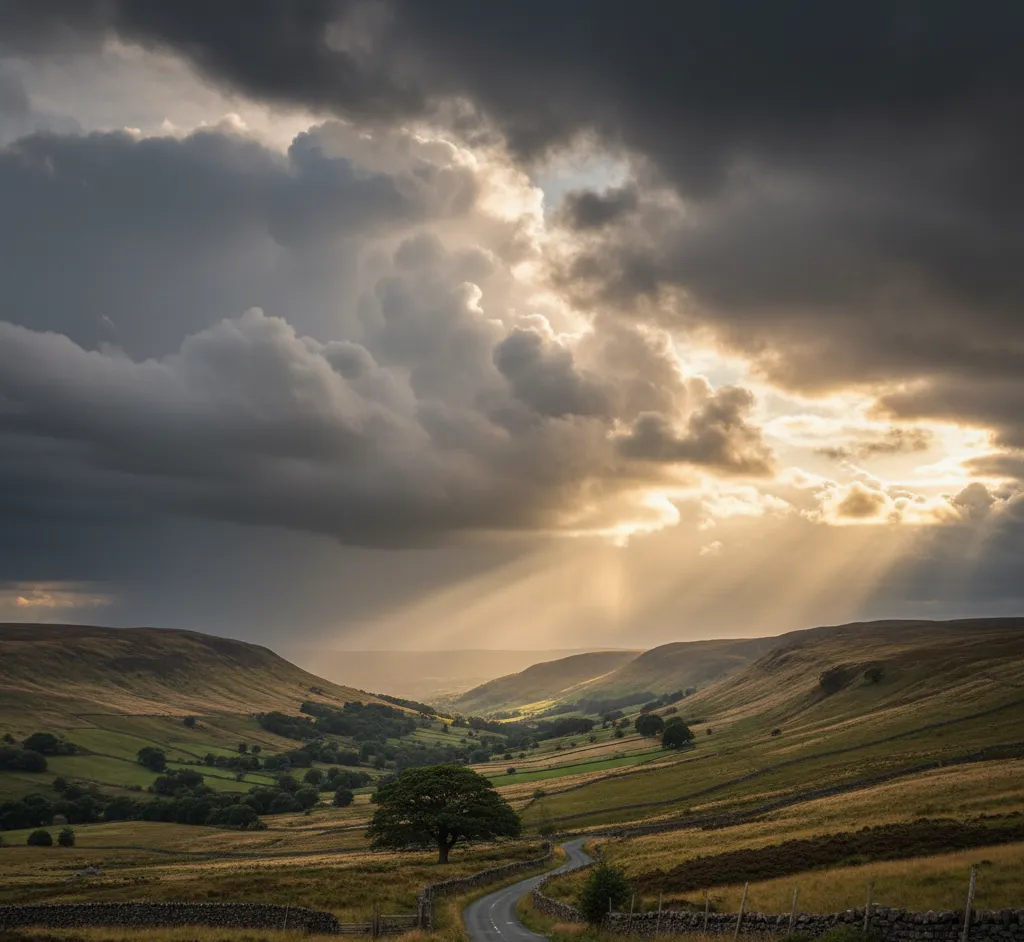
Reading Weather Signs: A UK Outdoor Guide
British weather is famously changeable. But it's not random. The atmosphere gives you clues — in the clouds, the wind, the pressure, and even the behaviour of wildlife — if you know what to look for. Reading those clues helps you make better decisions on the hill: press on, turn back, or pitch camp before the storm hits.
UK Weather Basics
Most UK weather comes from the Atlantic, driven by the jet stream. Understanding this gives you a huge head start:
- Weather generally moves west to east — look west to see what's coming
- Low pressure = unsettled, wet, windy. High pressure = settled, dry, calm
- Warm fronts bring prolonged rain. Cold fronts bring heavy showers then clearing
- The jet stream steers weather systems across the UK — its position determines whether you get Atlantic storms or continental settled weather
Reading Clouds
High Clouds (Above 6,000m)
Cirrus — thin, wispy, hair-like clouds. Often called "mare's tails."
- If they thicken and lower over hours, rain is coming (12–24 hours)
- If they stay thin and scattered, fair weather continues
Cirrostratus — a thin, milky veil across the sky. Often produces a halo around the sun or moon.
- Almost always means a warm front approaching
- Rain likely within 12–18 hours
Cirrocumulus — small, white, rippled patches. "Mackerel sky."
- Often precedes unsettled weather
- Old saying: "Mackerel sky, mackerel sky, never long wet, never long dry"
Medium Clouds (2,000–6,000m)
Altostratus — grey, featureless layer that covers the sky. Sun visible as a dim disc.
- Rain usually within 6–12 hours
- If you can't see the sun through it, rain is very close
Altocumulus — white or grey patches in rows or waves.
- On a warm morning, can indicate afternoon thunderstorms
- "Castellanus" towers rising from them are a strong thunderstorm warning
Low Clouds (Below 2,000m)
Stratus — flat, grey, uniform layer. The classic overcast sky.
- May produce drizzle or light rain
- Common in UK valleys and coastal areas
Stratocumulus — grey/white rolls or patches with gaps between.
- Rarely produces heavy rain
- The typical "partly cloudy" sky
Nimbostratus — thick, dark grey layer producing steady rain or snow.
- When this moves in, you're getting wet. No question
- Can last hours
Cumulonimbus — the big one. Towering, dark clouds with anvil-shaped tops.
- Thunderstorms, heavy rain, hail, lightning
- Develops rapidly on warm, humid days
- Take shelter if you see one building
The cloud sequence for an approaching warm front (the most common UK rain pattern) is: cirrus → cirrostratus → altostratus → nimbostratus. If you see this progression over several hours, rain is virtually guaranteed. The whole sequence typically takes 12–24 hours.
Reading the Wind
Wind Direction
In the UK:
- South-westerly winds — the most common. Bring mild, wet Atlantic weather
- Northerly winds — cold, often bringing showers, especially to northern areas
- Easterly winds — cold in winter (from Scandinavia/Russia), can bring prolonged cold spells
- South-easterly winds — warm in summer, can bring continental heatwaves
Wind Changes
- Veering (shifting clockwise, e.g., south → west) — often indicates a cold front passing and weather improving
- Backing (shifting anticlockwise, e.g., west → south) — often indicates approaching low pressure and deteriorating weather
Watch for wind shifts during the day. A wind that backs through the afternoon is warning you.
Wind Strength
If the wind is increasing:
- Look at tree movement: leaves rustling (light), branches swaying (moderate), whole trees bending (strong)
- On water: calm → ripples → wavelets → whitecaps (increasing wind)
- On the hill: if you're struggling to stand, it's time to get off exposed ground
Reading Pressure
If you carry a watch with a barometer or an altimeter (many outdoor watches have them):
- Falling pressure = weather deteriorating. The faster it falls, the worse it'll be
- Rising pressure = weather improving
- Steady high pressure = settled conditions continuing
- Rapid pressure drop = storm incoming, get off exposed ground
A 1 millibar per hour drop is significant. More than 3 mb per hour means a serious storm.
Altimeter trick: If your altimeter reads higher than you know you are (you haven't moved but it says you've gained height), pressure is falling and weather is likely deteriorating. The reverse means improving conditions.
Natural Indicators
These are less reliable than clouds and pressure, but worth knowing:
- Red sky at night — genuinely useful in the UK. A red sunset means clear skies to the west, so fair weather is likely coming (weather moves west to east)
- Red sky in the morning — the clear air has passed, and weather is approaching from the west
- Dew on the grass — suggests a clear night with light winds, often meaning a fair day ahead
- No morning dew — cloud or wind overnight, possibly incoming weather system
- Campfire smoke — rising straight up indicates high pressure (good weather). Swirling or dropping indicates low pressure (bad weather coming)
- Sounds carrying further than normal — low pressure and high humidity make sound travel further. If you can hear a distant road more clearly than usual, the weather may be changing
Putting It Together
Fair Weather Likely
- High, thin clouds or clear skies
- Steady or rising pressure
- Light, steady wind from the north or east
- Morning dew
- Red sky at night
Deteriorating Weather
- Clouds lowering and thickening (cirrus → altostratus → nimbostratus)
- Falling pressure
- Backing wind (shifting anticlockwise)
- Increasing wind strength
- Halo around the sun or moon
- Red sky in the morning
Storm Incoming
- Rapid pressure drop
- Towering cumulonimbus clouds building
- Sudden wind shift or strengthening
- Temperature change (warm before a cold front, cool before a warm front)
- Dark, ominous sky to the west
In mountain areas, conditions can be dramatically different from the valleys. Cloud base drops onto summits, wind is stronger on exposed ridges, and temperature drops roughly 1°C per 150 metres of altitude gain. Always check the mountain weather forecast (MWIS — Mountain Weather Information Service) before heading to the hills.
Practical Decision-Making
Weather reading isn't about predicting exact conditions — it's about making better decisions:
- Should I go higher? Check the clouds and wind. If they're deteriorating, maybe save the summit for another day
- Should I pitch camp or keep walking? If pressure is dropping and cloud is lowering, get camp set up while it's still dry
- Is this thunderstorm coming my way? Count seconds between lightning and thunder — divide by 3 for rough kilometres. If it's decreasing, it's getting closer. Get off exposed ground immediately
- Will tomorrow be better? If the cold front has passed (wind veered, sharp temperature drop, heavy shower then clearing), tomorrow often brings clear skies
Recommended Weather Monitoring Kit
While reading the sky is free, a barometric watch takes your weather prediction from good to genuinely useful.
Casio Pro Trek PRG-270 Watch
Amazon UKBarometer, altimeter, compass, thermometer
Solar
100m
Pros
- +Barometric pressure trend graph
- +Solar powered — no battery changes
- +Altimeter doubles as a weather indicator
Cons
- −Chunky on smaller wrists
- −Digital display can be hard to read in bright sun
A proper outdoor watch with a genuinely useful barometer. The pressure trend graph is worth the price alone.
View dealAffiliate link — we may earn a small commission at no extra cost to you
Pocket Weather Card (Matt Graham Design)
Amazon UKWaterproof card
Credit card
10g
Pros
- +Cloud identification chart with weather predictions
- +Waterproof and pocket-sized
- +Beaufort scale reference
Cons
- −You still need to look at the sky
A tenner's worth of meteorology on a waterproof card that fits in your map case. Brilliant reference aid.
View dealAffiliate link — we may earn a small commission at no extra cost to you
Check the forecast before you go out. Read the sky while you're out. Make decisions based on both. That's how experienced outdoor people stay safe.
Ready to gear up?
Use our kit builder to get a complete packout list tailored to your trip type, terrain, and budget — with prices and buy links.
Related reading
Bushcraft & Survival Skills: The Complete UK Guide
A practical guide to bushcraft and survival skills for UK conditions — from fire-starting and shelter-building to navigation and wild food.
Navigation Without GPS: Map, Compass & Natural Navigation
How to navigate with a map, compass, and natural signs when GPS fails — essential skills for UK hill walking and bushcraft.
Winter Camping Skills: Staying Warm & Safe in the UK
Essential winter camping skills for UK conditions — layering systems, condensation management, cold-weather cooking, and hypothermia awareness.
Night Hiking: A Practical Safety Guide for UK Walkers
How to hike safely at night in the UK — head torch selection, route planning, navigation in the dark, and essential safety advice.