This page contains affiliate links. If you purchase through them we may earn a small commission at no extra cost to you. Learn more
Night Hiking: A Practical Safety Guide for UK Walkers
Night Hiking: A Practical Guide for UK Walkers
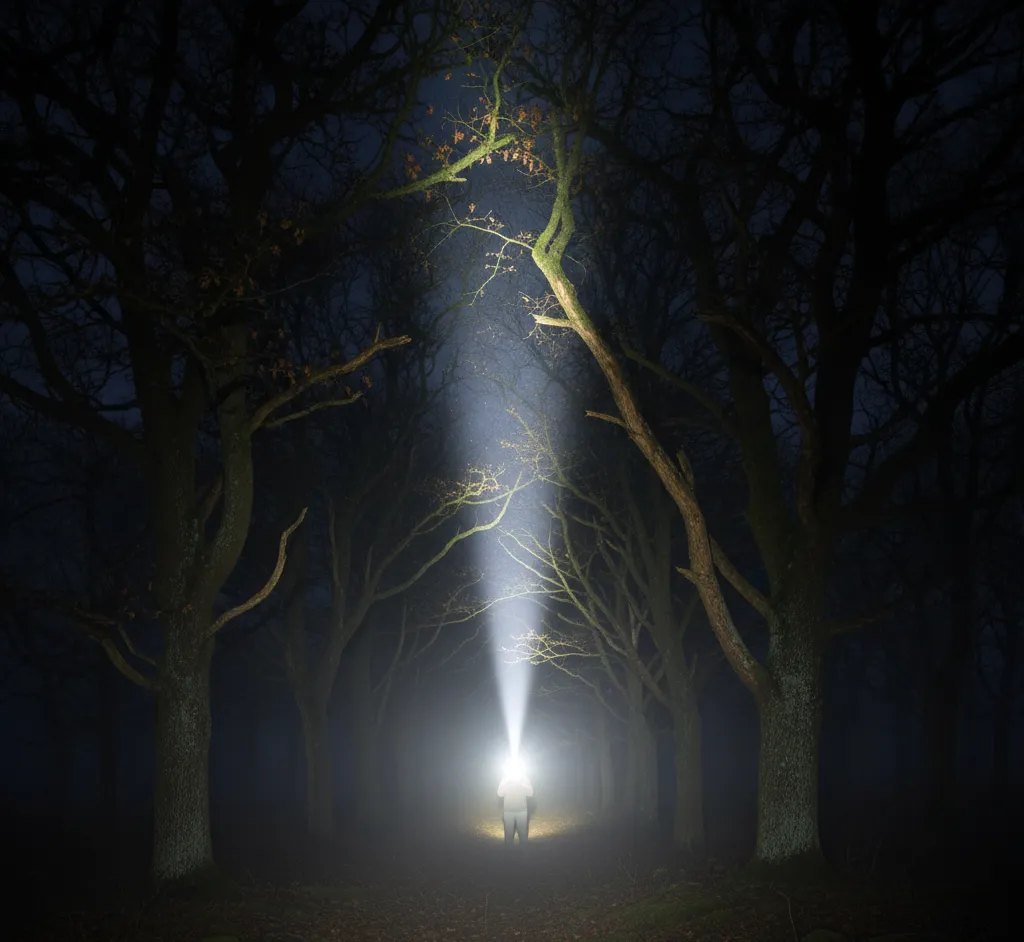
Night hiking changes everything. Familiar paths become alien. Distances feel different. Your senses sharpen. Whether you're deliberately heading out for a moonlit walk or you've been caught out by fading light on a winter afternoon, knowing how to move safely in darkness is a core outdoor skill.
Why Hike at Night?
- You got benighted — the most common reason. Winter days are short, walks overrun, and suddenly you're navigating in the dark
- Sunrise missions — setting off before dawn to catch sunrise from a summit
- Summer heat — in rare UK heatwaves, early morning or evening walking is more comfortable
- The experience — night walking is genuinely magical. Moonlit mountains, starry skies, the silence
- Challenge events — many charity and fell-running events include night sections
Head Torches
Your head torch is your most important piece of night-hiking kit. Don't cheap out.
What to Look For
- Brightness: 200–300 lumens is plenty for trail walking. Higher output (400+) is useful for route-finding in rough terrain
- Beam pattern: A mix of flood (wide, close) and spot (focused, distant) is ideal. Some torches let you switch between modes
- Battery life: Check the runtime at your typical brightness level, not maximum output. 8+ hours at medium brightness is a good benchmark
- Red light mode: Preserves your night vision. Essential for map reading and camp tasks
- Weight and comfort: You'll wear it for hours. It shouldn't bounce or give you a headache
- Waterproofing: IPX4 minimum (splash-proof). IPX7 (submersible) is better for UK conditions
Battery Tips
- Carry spare batteries or a backup torch. Always
- Lithium batteries perform better in cold weather than alkaline
- Rechargeable torches are fine if you charge them before every walk
- Keep spares in a waterproof bag in an accessible pocket, not buried in your pack
- In extreme cold, keep batteries warm inside your jacket
It takes 20–30 minutes for your eyes to fully adjust to darkness. Once adjusted, you can see surprisingly well by moonlight or starlight. Avoid looking directly at your torch beam or phone screen — it resets your night vision instantly. Use the red light mode for map reading.
Route Planning for Night Walks
Choose Your Route Wisely
- Stick to well-defined paths — footpaths, tracks, ridgelines with clear edges
- Follow linear features — walls, fences, streams, forest edges. These are much easier to follow at night than crossing open ground on a bearing
- Avoid complex navigation — multiple path junctions, featureless terrain, and technical scrambles are all harder in the dark
- Know the route — ideally, walk it in daylight first. Familiarity is a huge advantage at night
- Have an escape route — know how to get off the hill quickly if weather deteriorates or someone is injured
What to Avoid
- Cliff edges and steep drops (obviously, but worth stating)
- Boggy ground — hard to see and easy to stumble into
- Dense forest without clear paths — disorienting in the dark
- Water crossings — impossible to judge depth in torchlight
- Routes you haven't walked before in challenging terrain
Timing
Allow 50% more time than a daytime walk on the same route. Everything takes longer in the dark — navigation, route-finding, gear changes, even eating and drinking.
In winter, remember that "night" in the UK can start at 3:30 PM. Plan your walks with this in mind.
Navigation at Night
Map and Compass
Navigation at night relies heavily on the skills covered in our navigation guide, but with some differences:
- You can't see landmarks — so bearing-based navigation becomes more important
- Handrailing is king — following a wall, fence, or stream is far easier than walking on a bearing in the dark
- Pace counting matters more — you can't visually judge distance, so counting paces keeps you honest about how far you've walked
- Catching features are crucial — know what feature tells you you've gone too far
GPS as a Backup
Night hiking is one of the few situations where GPS genuinely earns its place alongside map and compass. Being able to check your position digitally — confirming what your map and compass tell you — is reassuring in the dark. But don't rely on it as your only method.
Terrain Awareness
Without visual cues, pay attention to:
- What's underfoot — path surface changes (tarmac to grass, grass to rock) tell you where you are
- Gradient changes — you can feel when you start climbing or descending
- Sound — streams, wind through trees, traffic noise all provide location information
- Shelter from wind — entering a valley or forest, you'll feel the wind drop
Safety Essentials
Tell Someone
Always leave your route plan with someone. Include:
- Where you're going
- What route you're taking
- Expected finish time
- What to do if you don't check in (call Mountain Rescue)
Group or Solo?
Night hiking with at least one other person is significantly safer than going solo. If you do go alone:
- Stick to routes you know well
- Stay on clear paths
- Carry a fully charged phone
- Be even more conservative with your route choice
Kit Checklist
In addition to normal hill walking kit:
- Head torch (primary) with fresh batteries
- Backup torch or spare batteries
- Fully charged phone
- Whistle
- Survival bag
- Extra warm layer — temperatures drop at night, especially in clear conditions
- Reflective elements on your clothing or pack (useful near roads)
Winter night hiking in mountain terrain is serious. Temperatures can drop well below freezing, ice forms on paths, and wind chill can be extreme. Don't attempt winter night walks on exposed mountain terrain unless you have solid navigation skills and appropriate winter equipment.
Making the Most of Night Walking
Once you've got the safety side sorted, night hiking is genuinely one of the best outdoor experiences available:
- Walk without a torch when the moon is bright — your eyes adapt and the landscape is stunning in moonlight
- Stop and listen — the nighttime soundscape is completely different. Owls, foxes, deer, water
- Look up — away from city lights, the UK's dark sky areas (Northumberland, Snowdonia, Exmoor, Galloway) offer spectacular stargazing
- Watch for wildlife — many animals are more active at night. Deer, badgers, foxes, and owls are all more likely to be seen
- Enjoy the silence — no other walkers, no traffic noise, just you and the hill
Recommended Night Hiking Kit
A reliable head torch is the single most important purchase. Don't skimp here.
Petzl Actik Core Head Torch
Amazon UK600 lumens max
Rechargeable CORE + AAA compatible
88g
IPX4
Pros
- +Rechargeable with AAA backup option
- +Red light mode preserves night vision
- +Excellent beam pattern — flood and spot
Cons
- −IPX4 is splash-proof, not submersible
The best mid-range head torch for UK night hiking. The dual battery system means you're never caught without power.
View dealAffiliate link — we may earn a small commission at no extra cost to you
Petzl e+LITE Emergency Head Torch
Amazon UK50 lumens
CR2032 x 2
26g
IPX7
Pros
- +Ultra-lightweight backup
- +10-year battery shelf life
- +Red and white modes
- +Submersible to 1m
Cons
- −50 lumens — emergency use, not primary
The perfect backup torch. Weighs 26g, fits in your pocket, and the batteries last a decade in storage.
View dealAffiliate link — we may earn a small commission at no extra cost to you
Nitecore NU25 UL Head Torch
Amazon UK400 lumens
USB-C rechargeable
28g
IPX6
Pros
- +Incredibly light at just 28g
- +USB-C charging
- +Red, white, and high-CRI modes
Cons
- −No removable battery — must charge via USB
The ultralight option for weight-conscious hikers. Astonishing output for something lighter than an AA battery.
View dealAffiliate link — we may earn a small commission at no extra cost to you
Night hiking isn't about making things difficult. It's about experiencing the outdoors in a completely different way. Start with a well-known route on a clear, moonlit night, build your confidence, and discover a whole new side of the UK hills.
Ready to gear up?
Use our kit builder to get a complete packout list tailored to your trip type, terrain, and budget — with prices and buy links.
Related reading
Bushcraft & Survival Skills: The Complete UK Guide
A practical guide to bushcraft and survival skills for UK conditions — from fire-starting and shelter-building to navigation and wild food.
Navigation Without GPS: Map, Compass & Natural Navigation
How to navigate with a map, compass, and natural signs when GPS fails — essential skills for UK hill walking and bushcraft.
Emergency Signalling: How to Get Rescued in the UK
How to signal for help in a UK outdoor emergency — whistle blasts, mirror signals, phone tips, and how mountain rescue works.
Reading Weather Signs: A Complete UK Outdoor Guide
How to read clouds, wind, and pressure changes to predict UK weather — practical skills for hill walkers and wild campers.