This page contains affiliate links. If you purchase through them we may earn a small commission at no extra cost to you. Learn more
Emergency Food Storage for UK Homes — What to Stock and Keep
Quick Summary
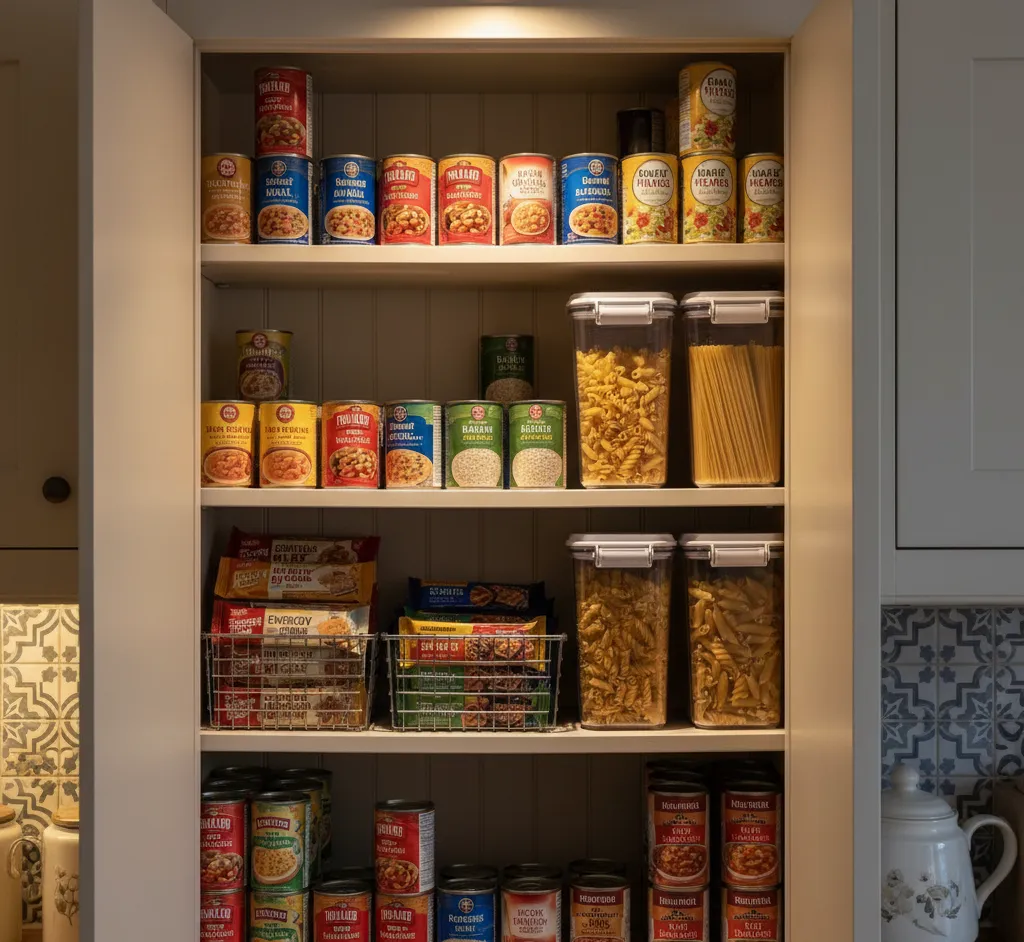
- A 72-hour [emergency food](/guides/home-emergency/best-emergency-food-72hr-kit-uk) supply for two adults costs about £20–£30 and fits in one cupboard
- Focus on shelf-stable food that doesn't need cooking or refrigeration
- Use a rotation system — eat the oldest items and replace them so nothing goes to waste
You Don't Need a Bunker Full of Beans
Let's get this out of the way: this isn't about stockpiling for the apocalypse. This is about having enough food in the house that if the power goes out, the roads flood, or the shops can't open for a few days, you're not going hungry.
The UK government recommends households have at least a 72-hour supply of food and water. Most UK homes probably have a reasonable amount of food already — the problem is it usually needs cooking, refrigerating, or both.
When the power's out and you can't get to the shops, you need food that:
- Has a long shelf life
- Doesn't need refrigeration
- Ideally doesn't need cooking (or only needs boiling water)
- Actually tastes decent (morale matters)
The 72-Hour Emergency Food Shopping List
Here's a practical shopping list for two adults. Adjust quantities for your household.
No-Cook Essentials
- Crackers or oatcakes (2–3 packs)
- Peanut butter or other nut butter (1 jar)
- Tinned tuna or sardines (4 tins)
- Tinned beans, chickpeas, or lentils (4 tins)
- Tinned fruit in juice (2 tins)
- Cereal bars or flapjacks (box of 10+)
- Dried fruit and nuts (2–3 bags)
- Long-life UHT milk (1 litre)
- Instant coffee or tea bags (if you have a gas hob or camping stove)
- Chocolate or biscuits (seriously — comfort food matters)
Needs-Boiling-Water Only
- Instant porridge sachets
- Pot Noodles or instant noodles
- Cup-a-Soup or instant soup
- Couscous (just add hot water)
- Instant mashed potato
Tinned Meals (If You Can Heat Them)
- Tinned stew, chilli, or curry
- Tinned soup (the thick, meal-type ones)
- Tinned spaghetti or ravioli
- Tinned rice pudding
Don't Forget
- Manual tin opener — An electric one is useless in a power cut
- Disposable plates and cutlery — If you can't wash up without running water
- Cling film or zip-lock bags — For storing opened food
- Salt, pepper, hot sauce — Makes everything more bearable
The manual tin opener is non-negotiable
Building Your Supply on a Budget
You don't need to buy everything at once. Here's a budget-friendly approach:
Week 1 (about £8): Crackers, peanut butter, 4 tins of beans/tuna, manual tin opener Week 2 (about £7): Cereal bars, dried fruit, UHT milk, instant porridge Week 3 (about £8): Tinned meals (stew, soup), instant noodles, instant coffee/tea Week 4 (about £5): Tinned fruit, chocolate, Pot Noodles, couscous
Total: about £28. That's your 72-hour supply for two adults, built up over a month without any single big spend.
Supermarket Own-Brand Is Fine
There's no need for premium brands in an emergency food stash. Aldi, Lidl, Tesco Value, Asda Smart Price — they all do the job. A tin of own-brand beans is 25p. Emergency food doesn't need to be gourmet.
The Rotation System
The biggest mistake people make with emergency food is buying it, shoving it in a cupboard, and forgetting about it until everything's expired.
How to Rotate
- Store your emergency food together in one area — a specific shelf or box
- When you add new items, put them at the back
- Every 3 months, take the oldest items out and eat them as normal meals
- Replace what you've eaten with fresh stock
- Write the purchase date on items with a marker if the expiry date is hard to read
Shelf Life Guide
| Item | Typical Shelf Life |
|---|---|
| Tinned goods | 2–5 years |
| Dried pasta/rice | 2+ years |
| UHT milk | 6–9 months |
| Cereal bars | 6–12 months |
| Peanut butter | 12–18 months |
| Crackers/oatcakes | 6–12 months |
| Instant noodles | 6–12 months |
| Dried fruit/nuts | 6–12 months |
| Instant coffee | 12–24 months |
| Couscous | 12+ months |
Tinned goods are your best friends for emergency storage. They last years, they're cheap, and they're nutritionally complete. If you're thinking carefully about macros and calorie needs during a period of physical stress or activity, our sister site Katabolic has solid guides on protein targets and calorie planning.
Cooking Without Power
If you do have the means to heat food, here are your options:
Gas Hob
If your cooker is gas, the hob may work with manual ignition (use a long lighter or match). The oven won't work without electricity on most modern gas cookers, but the hob rings usually will.
Camping Stove
A small camping stove with gas canisters is a brilliant backup. Use it outdoors or in a well-ventilated area — never in a sealed room.
Campingaz Bistro 2 Camping Stove
Amazon UK2,200W
Campingaz CP250 cartridge
2hrs per cartridge
1.2kg
Pros
- +Boils water in under 4 minutes
- +Compact and easy to store
- +Simple click-ignition
Cons
- −Use outdoors or well-ventilated only
- −Cartridges sold separately
Keep one of these in the cupboard with a couple of spare gas cartridges. When the power's out, you can still make hot meals and brews.
View dealAffiliate link — we may earn a small commission at no extra cost to you
Kelly Kettle or Stormkettle
Boils water using twigs and small fuel. Great for making hot drinks and pouring over instant food.
Ventilation is essential
Storing Food Properly
Proper storage makes the difference between food that lasts and food that goes off or gets eaten by pests.
Really Useful Box 42L Clear Storage Box
Amazon UK42 litres
Polypropylene
Clip-lock
Yes
Pros
- +Keeps food safe from pests and damp
- +Clear so you can see contents
- +Clip-lock lid seals well
Cons
- −Takes up a shelf or under-bed space
- −Not fully airtight
Put your entire 72-hour food supply in one of these. Pest-proof, damp-proof, and you can see exactly what's in it.
View dealAffiliate link — we may earn a small commission at no extra cost to you
Special Dietary Needs
Don't forget dietary requirements when building your emergency supply:
- Vegetarian/vegan — Tinned beans, lentils, chickpeas, nut butters, UHT plant milk
- Gluten-free — Rice cakes instead of crackers, gluten-free instant porridge, tinned goods are mostly GF
- Diabetic — Include low-GI options, avoid too much sugar-heavy food
- Allergies — Check labels carefully, especially on cereal bars and instant meals
- Baby food — Ready-made formula and pouches. Don't rely on items needing preparation
- Pet food — Keep a few days of pet food in your emergency supply too
Storage Tips
- Cool, dark, dry — The classic storage conditions. A cupboard or under-stairs space is perfect
- Off the floor — In case of minor flooding or leaks
- Away from chemicals — Cleaning products, paint, etc. can taint food through packaging
- Pest-proof — Consider a sealed plastic box if you've had issues with mice
- Accessible — Don't bury it behind other stuff. You need to reach it quickly in the dark
Space-Limited Homes
If you're in a flat or small home, see our flat and apartment emergency prep guide for space-saving storage ideas. Even the smallest home can fit a 72-hour food supply in a single box under the bed.
Your Emergency Food Checklist
- 72-hour food supply stored (no-cook items minimum)
- Manual tin opener tested and stored with food
- Water supply sorted (see our emergency water guide)
- Dietary requirements covered for all household members
- Pet food included if applicable
- Rotation schedule set (check every 3 months)
- Alternative cooking method available (gas hob, camping stove)
Twenty-odd quid and one shelf in a cupboard. That's what stands between your household and going hungry during a disruption. There's really no excuse not to do it.
Ready to gear up?
Use our kit builder to get a complete packout list tailored to your trip type, terrain, and budget — with prices and buy links.
Related reading
Emergency Preparedness for UK Homes: Your Complete Guide
A practical guide to emergency preparedness for UK homes covering floods, storms, power cuts, and everything in between.
Emergency Water Supply for UK Homes: How to Prepare
How to store emergency water, purify water in an emergency, and deal with mains water supply disruptions in UK homes. Practical advice.

Power Cut Preparation for UK Homes: Full Checklist
How to prepare for power cuts in the UK — torches, batteries, food preservation, heating alternatives, and keeping your phone charged.
Emergency Preparedness for Flats and Apartments UK
Emergency preparedness when you live in a flat or apartment — limited space solutions, communal building considerations, and what renters need to know.