This page contains affiliate links. If you purchase through them we may earn a small commission at no extra cost to you. Learn more
Emergency Preparedness for Elderly People in the UK
Quick Summary
- Elderly people are disproportionately affected by power cuts, cold weather, and flooding — check on them
- Register with the Priority Services Register (free) for extra support during outages
- Medical equipment that needs electricity needs a backup plan — power banks, battery backups, or manual alternatives
Why Elderly People Are More Vulnerable
This isn't about being patronising. It's about recognising that emergencies hit older people harder for practical, physical reasons:
- Cold is more dangerous — older bodies regulate temperature less effectively. Hypothermia can set in at higher temperatures
- Mobility issues make evacuation harder and increase fall risk in the dark
- Medical equipment may depend on electricity — oxygen concentrators, CPAP machines, stairlifts, powered beds
- Isolation means problems go unnoticed longer, especially for those living alone
- Communication can be harder if they're not confident with smartphones or don't have mobile data
If you have elderly parents, grandparents, or neighbours, spending an hour helping them prepare could genuinely save their life.
The Priority Services Register
This is the single most important thing on this page. The Priority Services Register (PSR) is a free service that gives extra support to vulnerable people during emergencies.
Who Can Register
- Anyone over 60
- People with disabilities or chronic illness
- People with visual or hearing impairments
- Those dependent on medical equipment needing electricity
- Households with children under 5
What You Get
- Priority restoration during power cuts
- Advance notice of planned outages
- Proactive contact during extended outages
- Alternative heating or cooking facilities in some cases
- Nominated contact person who'll be informed if there's a problem
How to Register
- Call 105 (power network) or your energy supplier
- Register with your water company separately
- Register with your gas distributor
- You can also register through your energy supplier's website
Help your elderly relative do this. It takes 10 minutes and could make an enormous difference.
Register with all utilities
The Elderly Emergency Grab Bag
Help them pack a bag that's ready to go. Keep it somewhere accessible — not in the loft or at the back of a cupboard.
Essentials
- Medications — A clear, up-to-date list of all medications, dosages, and the GP's name. Keep a week's supply in the bag
- Medical information — Any conditions, allergies, blood type if known
- Glasses — A spare pair if possible
- Hearing aid batteries — A spare pack
- Dentures — Spare adhesive
- Warm clothing — A hat, gloves, warm socks, and a fleece
- Comfortable shoes — Ones they can walk in, with grip
- Torch — A simple, easy-to-use one with spare batteries
- Phone and charger — And a power bank if they'll use one
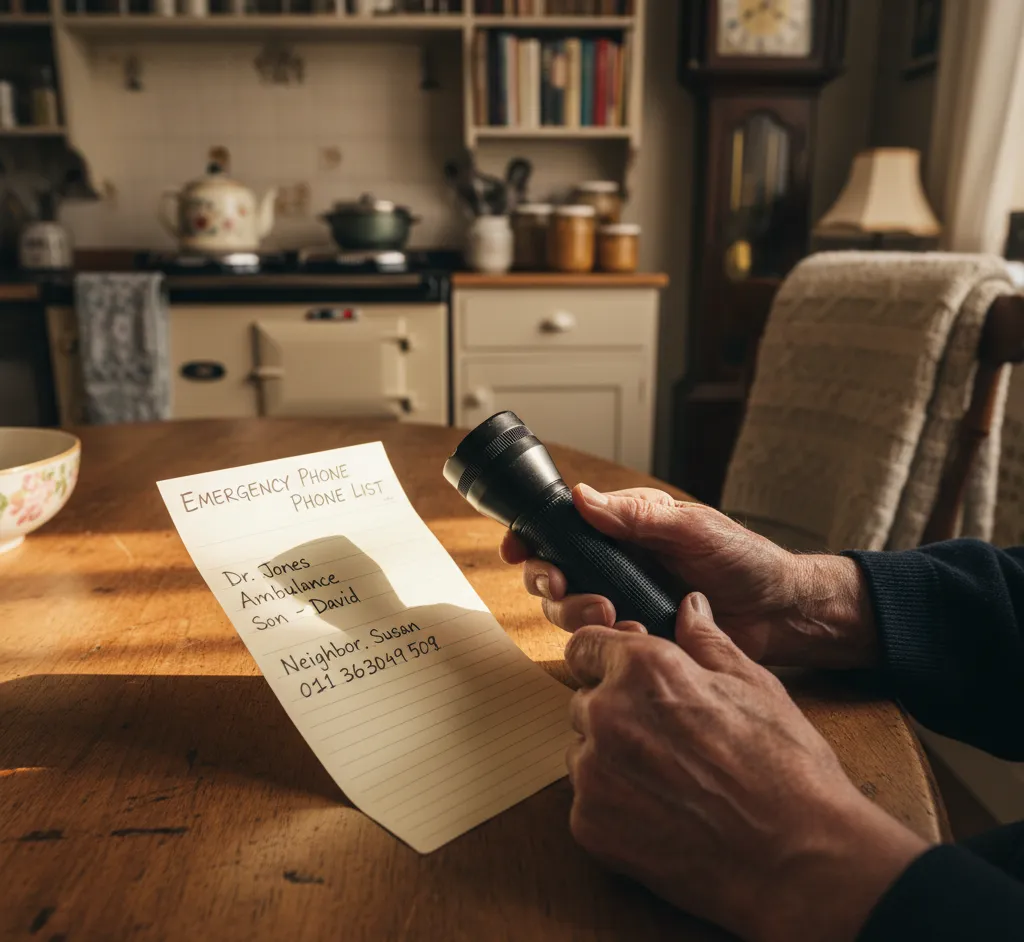
- Key contacts list — Written in large, clear print. Include family, GP, pharmacy, neighbours
- Cash — Card machines don't work without power. Keep £20–£50 in small notes
- House keys and car keys — Spare set
Nice to Have
- A familiar blanket or shawl
- Snacks (cereal bars, biscuits)
- Bottled water
- A book or playing cards
- Personal hygiene items
Varta Indestructible F20 Pro Torch
Amazon UK350
2x AA
Up to 25hrs
9m
Pros
- +Nearly indestructible — survives drops and impacts
- +Simple on/off switch — no complicated modes
- +Bright enough for any home use
Cons
- −Quite heavy for elderly hands
- −Not rechargeable
The torch for people who need something simple and reliable. One button, very bright, nearly impossible to break.
View dealAffiliate link — we may earn a small commission at no extra cost to you
Medical Equipment During Power Cuts
This is a critical area that needs proper planning:
Oxygen Concentrators
- Mains-powered concentrators stop during power cuts
- Have backup portable oxygen cylinders (discuss with their medical team)
- Register with the PSR — they'll prioritise restoration
- Know the emergency number for their oxygen supplier
CPAP Machines (Sleep Apnoea)
- A battery backup for CPAP machines costs £100–£200
- Some CPAP machines can run from a car's 12V socket with an adapter
- In a short power cut, sleeping propped up on pillows is a temporary alternative (discuss with their doctor)
Stairlifts
- Most stairlifts have a battery backup that allows a few trips during a power cut
- Make sure the stairlift is always on charge so the battery is full
- If the battery is dead, they'll need to stay on one floor — plan for this (keep essentials on the ground floor)
Electric Beds and Hoists
- These don't work without power
- Manual overrides exist on some models — check and practice using them
- Have extra pillows to prop the person up manually
- If a hoist is essential, contact their care provider about emergency arrangements
Medication Refrigeration
- Some medications (certain insulins, for example) need refrigeration
- A cool bag with ice packs can maintain temperature for 12–24 hours
- Know which medications are temperature-sensitive and plan accordingly
Lifeline Compact Power Station 150Wh
Amazon UK150Wh
100W AC + USB
1.6kg
Mains/car/solar
Pros
- +Powers CPAP machines for a full night
- +Light enough for elderly to handle
- +Multiple output types — AC, USB-C, USB-A
Cons
- −Won't run high-draw medical equipment
- −Needs regular recharging
If your elderly relative uses a CPAP machine, this keeps it running through a power cut. Peace of mind for the price of a few months' insurance.
View dealAffiliate link — we may earn a small commission at no extra cost to you
Our sister site IWantSolar covers emergency backup power systems in detail, including options that automatically switch on during a power cut.
Don't wait for a power cut to discover a problem
Checking on Elderly Neighbours
You don't have to be related to someone to help them. Knowing your elderly neighbours and checking on them during emergencies saves lives every year.
Build the Relationship Before an Emergency
- Introduce yourself and exchange phone numbers
- Find out if they live alone
- Ask if they have family nearby
- Offer to help with small things — this builds trust
During an Emergency
- Knock on their door to check they're okay
- Ask if they have heating, food, water, and light
- Check if they need medications
- Offer to charge their phone
- Make them a hot drink if you can
- Help them contact family if needed
Signs of Hypothermia
In cold weather, watch for:
- Shivering (though in severe cases, shivering stops)
- Confusion or drowsiness
- Slurred speech
- Cold, pale skin
- Slow breathing
If you suspect hypothermia, call 999. Warm them gradually — blankets, warm (not hot) drinks, and get them into a warm room if possible.
Heating and Cold Weather
Elderly people are at significantly higher risk from cold:
- The recommended room temperature for elderly people is at least 18°C (21°C if they have health conditions)
- During a boiler breakdown, see our boiler failure guide — but for elderly people, temporary heating is urgent, not optional
- Help them access the Winter Fuel Payment and Warm Home Discount
- Check their home for draughts and help with basic draught-proofing
Silentnight Yours & Mine Dual Electric Blanket
Amazon UKDouble
Dual — independent sides
3
Overheat protection
Pros
- +Heats the bed without heating the whole house
- +Very low running cost
- +Overheat protection for safety
Cons
- −Only warms the bed — not the room
- −Needs electricity — no use in a power cut
For elderly people who feel the cold, an electric blanket cuts heating costs and keeps them warm in bed. Not a power cut solution, but perfect for boiler breakdowns when you still have electricity.
View dealAffiliate link — we may earn a small commission at no extra cost to you
Communication Plan
Set up a simple communication plan:
- Daily check-in — A quick call or text at the same time each day during an emergency
- Backup contact — If you can't reach them, who else can check? A neighbour, another family member
- Landline — Many elderly people rely on landlines. Note that cordless phones don't work in a power cut — a corded phone plugged into the wall socket will (if the phone line is working)
- Written numbers — Large print, stuck to the fridge or by the phone. Include 999, 105, GP, pharmacy, family members
Key Contacts for Elderly Support
| Service | Number |
|---|---|
| Priority Services Register | Call 105 |
| Age UK advice line | 0800 678 1602 |
| Samaritans | 116 123 |
| NHS 111 | 111 |
| Emergency services | 999 |
| Warm Home Discount | Check energy supplier |
| Winter Fuel Payment | gov.uk |
Your Checklist for Helping an Elderly Relative
- Registered with Priority Services Register (electricity, gas, water)
- Grab bag packed and accessible
- Medication list up to date
- Spare medication supply in grab bag
- Medical equipment backup plan in place
- Key contacts written in large print by the phone
- Neighbours know them and have your contact number
- Heating plan for boiler breakdown
- Torch and batteries accessible
- Communication plan agreed
Taking an hour to sort this out for someone elderly isn't just helpful — it could be life-saving.
Ready to gear up?
Use our kit builder to get a complete packout list tailored to your trip type, terrain, and budget — with prices and buy links.
Related reading
Emergency Preparedness for UK Homes: Your Complete Guide
A practical guide to emergency preparedness for UK homes covering floods, storms, power cuts, and everything in between.

Power Cut Preparation for UK Homes: Full Checklist
How to prepare for power cuts in the UK — torches, batteries, food preservation, heating alternatives, and keeping your phone charged.
Boiler Failure Emergency: What to Do When Your Heating Dies
What to do when your boiler breaks down in the middle of winter — temporary heating options, finding emergency plumbers, and your rights as a tenant.
Winter Readiness for UK Homes: Seasonal Prep Guide
Prepare your UK home for winter — pipe lagging, boiler servicing, draught-proofing, de-icer supplies, and staying warm when it's freezing.