This page contains affiliate links. If you purchase through them we may earn a small commission at no extra cost to you. Learn more
Rural vs Urban Emergencies: Different Challenges, Different Prep
Quick Summary
- Rural areas face longer power cuts, slower emergency response, and isolation — but often have more self-sufficiency
- Urban areas have faster services but more infrastructure dependency and less storage space
- Both need preparation, but the priorities are different
Same Country, Different Risks
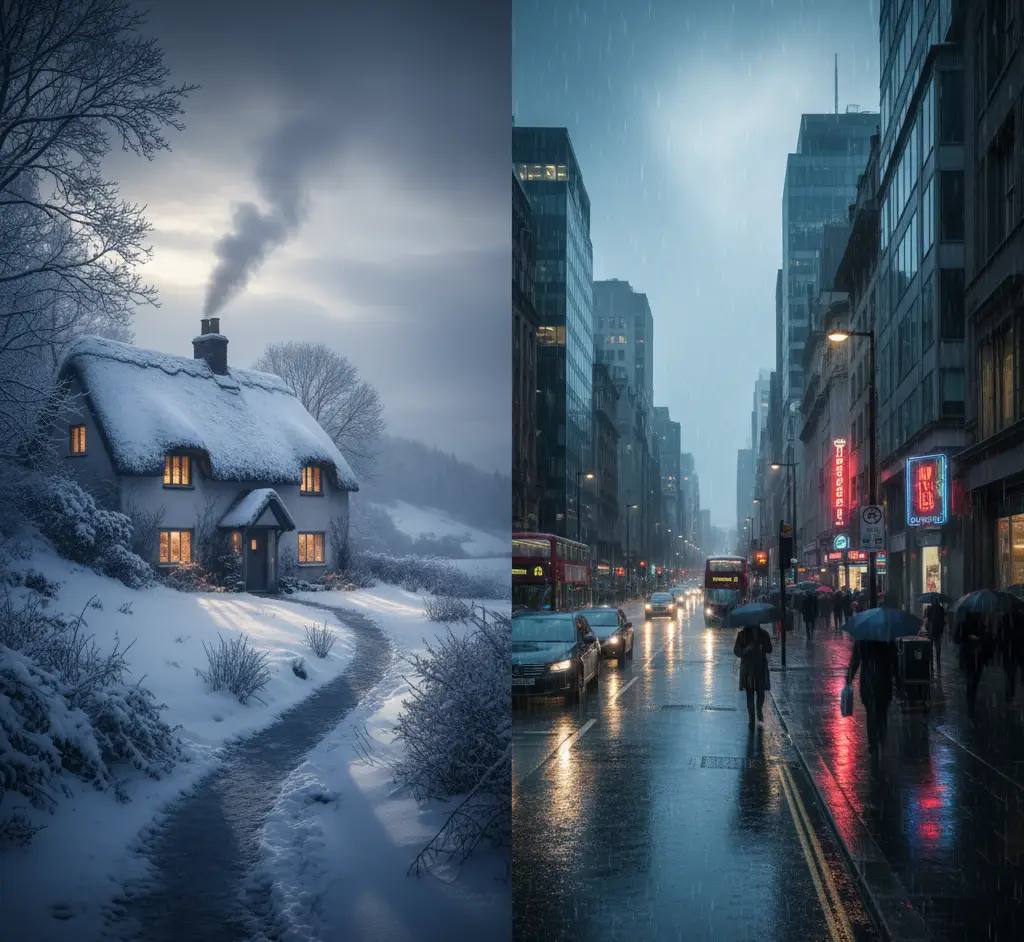
Emergency prep isn't one-size-fits-all. A Victorian terrace in Manchester faces completely different risks to a farmhouse in rural Wales. The threats overlap, but the priorities, challenges, and solutions are different.
Understanding what your setting throws at you is the first step to preparing properly.
Rural Emergency Challenges
Isolation
This is the big one. When a tree blocks the only road out of your village, or snow makes lanes impassable, you're on your own until someone can get through.
- Emergency services take longer to reach rural areas (average response times are significantly higher)
- You may be miles from the nearest hospital, fire station, or police station
- Mobile signal can be patchy or non-existent in rural areas
- Neighbours may be far away
Power Cuts
Rural areas experience longer and more frequent power cuts:
- Overhead power lines are more exposed to weather
- Tree branches bring down lines in storms
- Restoration takes longer because engineers have more ground to cover and more individual faults to find
- Some rural areas are at the end of the supply chain — last to be restored
Water Supply
- Private water supplies (wells, boreholes, springs) are common in rural areas and are your responsibility to maintain
- Mains water to rural properties can be disrupted by burst pipes in remote locations
- It takes longer for water companies to reach rural faults
Flooding
- River flooding affects many rural areas
- Drainage infrastructure may be less developed
- Flash flooding in hilly areas can be sudden and severe
- Rural roads flood easily and become impassable
Access and Roads
- Single-track roads can be blocked by one fallen tree
- Snow and ice aren't cleared as quickly as main roads
- You may need a 4x4 or at least decent tyres
- Fuel stations can be distant — don't run your tank low
Healthcare
- GP surgeries may be further away
- Pharmacies may have limited stock
- Ambulance response times are longer
- Air ambulance may be the fastest response for serious emergencies
The rural 7-day rule
Rural Advantages
It's not all doom and gloom. Rural properties have significant advantages:
- Space — More room for supplies, generators, fuel storage
- Land — Potential for growing food, collecting rainwater, firewood
- Self-sufficiency culture — Rural communities tend to be more prepared naturally
- Community — Smaller communities often look out for each other more actively
- Alternative heating — Many rural homes have wood burners, oil heating, or solid fuel options
- Less infrastructure dependency — If you have your own water supply and heating, you're less affected by utility failures
Essential Rural Gear
If you live rurally, these products address your biggest vulnerabilities — extended power cuts and isolation.
Jackery Explorer 500 Portable Power Station
Amazon UK518Wh
500W AC
6kg
Solar/mains/car
Pros
- +Runs fridge, lights, and devices for hours
- +Silent — no generator noise or fumes
- +Charges from solar panels
Cons
- −Expensive upfront
- −Won't run high-draw appliances
For rural homes with frequent extended power cuts, this replaces a noisy generator. Powers lights, phones, laptops, and even a small fridge.
View dealAffiliate link — we may earn a small commission at no extra cost to you
EcoFlow DELTA 2 Portable Power Station
EcoFlow1024Wh
1800W AC
12kg
Solar/mains/car
Pros
- +Powers fridges, microwaves, and power tools
- +1800W output covers most household needs
- +Expandable with extra battery
Cons
- −Heavy — 12kg
- −Significant investment at ~£850
Affiliate link — we may earn a small commission at no extra cost to you
For a full comparison of portable power stations and home solar battery options, see our sister site IWantSolar.
Motorola Talkabout T62 Two-Way Radios (pair)
Amazon UKUp to 8km
16
Rechargeable NiMH
IPX4
Pros
- +Work where mobile signal doesn't
- +No subscription or network needed
- +8km range covers most rural scenarios
Cons
- −Range depends on terrain
- −Line of sight is best — hills reduce range
When the mobile signal fails, these still work. Keep a pair for communicating across your property or with nearby neighbours.
View dealAffiliate link — we may earn a small commission at no extra cost to you
Urban Emergency Challenges
Infrastructure Dependency
Urban living means depending on systems you don't control:
- Electricity, gas, water, and sewage are all centralised
- Public transport disruptions can strand you
- If the local supermarket can't get deliveries, shelves empty fast
- Communication infrastructure (mobile masts, internet exchanges) can fail
Space Constraints
- Limited storage for emergency supplies
- No garden or garage for bulky items like generators
- Flats present particular challenges (see our flat emergency prep guide)
Population Density
- More people competing for limited emergency resources
- Evacuation is slower with more people
- Emergency services are stretched thinner during city-wide events
- Panic buying clears shops faster in urban areas
Flooding
- Surface water flooding is a growing urban problem — hard surfaces can't absorb rainfall
- Older sewer systems can't cope with heavy rain, leading to sewage flooding
- Basement flats are particularly vulnerable
Heat
- Urban heat islands mean cities get significantly hotter during heatwaves
- Flats with no cross-ventilation can become dangerously hot
- Concrete and tarmac store and radiate heat
Don't assume urban = safe
Urban Advantages
Cities have their own strengths:
- Faster emergency response — Usually. When services aren't overwhelmed
- More resources nearby — Shops, pharmacies, hospitals
- Better infrastructure — Roads cleared faster, power restored sooner (usually)
- Public transport — Alternative ways to get around
- More neighbours — Help is often just a knock away
- Mobile and internet coverage — Generally more reliable
Essential Urban Gear
City-dwellers need compact, multi-purpose gear that doesn't take up much space.
Anker Nano Power Bank 10,000mAh
Amazon UK10,000mAh
30W USB-C PD
200g
Pocket-sized
Pros
- +Pocket-sized — fits anywhere
- +30W fast charging
- +Built-in USB-C cable on some models
Cons
- −Only 2-3 phone charges
- −Small capacity for extended outages
The perfect urban emergency power bank. Small enough to keep in a drawer, bag, or emergency box.
View dealAffiliate link — we may earn a small commission at no extra cost to you
What Rural Homes Should Prioritise
- Extended supplies — 7 days of food, water, and essentials minimum
- Generator or portable power — For extended power cuts. Maintain it and keep fuel stored safely
- Communication backup — A landline corded phone, a battery-powered radio, and consider a satellite communicator for areas with no mobile signal
- Heating independence — Wood burner with a good supply of seasoned firewood, oil tank kept above half-full in winter
- Vehicle readiness — Keep fuel above half-tank. Winter tyres or chains. Emergency kit in the car
- First aid capability — More comprehensive first aid kit. Consider a first aid course — you may be the first responder
- Water independence — If you're on a private supply, maintain it. If on mains, store more backup water
- Community connections — Know your neighbours. Establish a local emergency contact network
- Snow and ice preparation — Your own grit/salt supply. Snow shovel. Knowledge of how to safely clear your access
What Urban Homes Should Prioritise
- Compact emergency kit — Space-efficient supplies (see our flat prep guide)
- Power banks and charging — Multiple charged power banks. Your phone is critical for information and communication
- Cash — Card machines don't work without power. Keep £50–£100 at home
- Know your building — Fire exits, communal systems, building management contacts
- Neighbourhood connections — Know your immediate neighbours. Exchange numbers
- Multiple exit routes — Know how to get out of your area by different routes
- Public transport alternatives — Know bus routes, walking routes, and cycling options
- Flood awareness — Check your flood risk, especially if you're in a basement or ground-floor flat
- Heat management — Fans, blackout curtains, and a plan for heatwaves
Both Need
Regardless of where you live, everyone needs:
- Torch and batteries
- Power bank
- Battery or wind-up radio
- First aid kit
- 72-hour food supply minimum
- Water supply
- Emergency contacts written down
- Insurance review
- Household emergency plan
Making the Most of Your Setting
The best approach is to honestly assess what your setting throws at you and prepare for those specific risks. A blanket "emergency prep" approach wastes effort on low-probability scenarios while missing the obvious ones.
Rural? Focus on self-sufficiency and extended timelines. Urban? Focus on compact preparation and community connections.
Either way, the basics are the same: light, heat, water, food, communication. Everything else is refinement.
Ready to gear up?
Use our kit builder to get a complete packout list tailored to your trip type, terrain, and budget — with prices and buy links.
Related reading
Emergency Preparedness for UK Homes: Your Complete Guide
A practical guide to emergency preparedness for UK homes covering floods, storms, power cuts, and everything in between.
Emergency Preparedness for Flats and Apartments UK
Emergency preparedness when you live in a flat or apartment — limited space solutions, communal building considerations, and what renters need to know.

Power Cut Preparation for UK Homes: Full Checklist
How to prepare for power cuts in the UK — torches, batteries, food preservation, heating alternatives, and keeping your phone charged.

Emergency Water Supply for UK Homes: How to Prepare
How to store emergency water, purify water in an emergency, and deal with mains water supply disruptions in UK homes. Practical advice.