This page contains affiliate links. If you purchase through them we may earn a small commission at no extra cost to you. Learn more
Best Emergency Communication Gear for UK Outdoors 2026
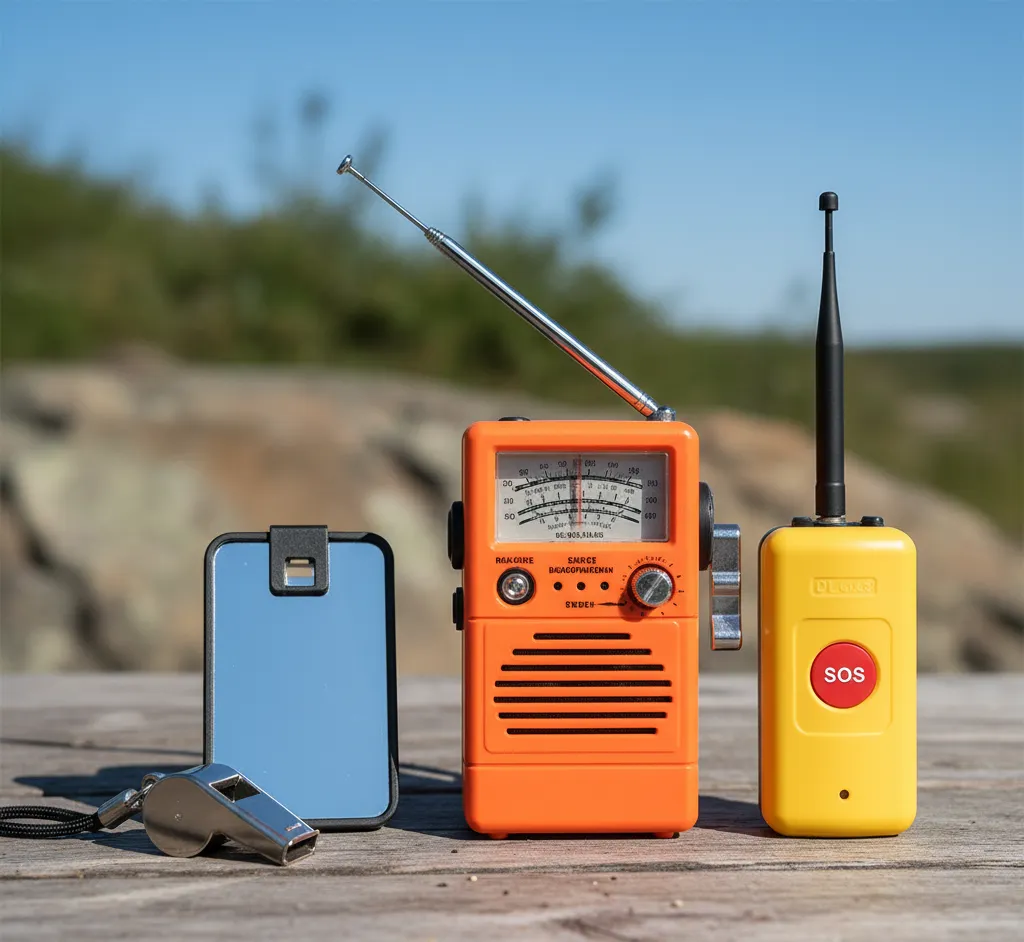
Communication Options — Simplest to Most Advanced
1. Whistle — ~£3
Six blasts, one minute gap, repeat. Audible up to 1.6km in still air. No batteries, no signal needed, works in any weather. Attach one to your rucksack strap permanently.
Best for: Every walk, every kit, every person
2. Mobile Phone
Your most versatile communication tool. 999 calls connect through any available network (not just your provider). Text 999 if pre-registered and voice call isn't possible.
Tips:
- Register for 999 text service (text "register" to 999)
- Download what3words app — gives rescue services your exact location
- Keep charged, carry a power bank
- Know that signal is patchy in UK mountains
Best for: Most situations with mobile signal
3. PMR446 Radio — ~£30–60 per pair
Short-range radio (up to 5km line-of-sight, 1–2km in terrain). Licence-free in the UK. Useful for groups spreading across terrain.
Recommended: Motorola Talkabout T82 Extreme (~£60 per pair)
Best for: Groups in hills, family walks where people spread out
4. Emergency Radio (DAB/FM) — ~£20–30
Battery or wind-up radio for receiving emergency broadcasts during power cuts and major incidents. Essential for home emergency kits.
Recommended: Roberts Play 10 (~£30) or wind-up alternative
Best for: Home emergency kits, power cut situations
5. Personal Locator Beacon (PLB) — ~£200–300
Press the button, satellites relay your GPS position to rescue services. Works anywhere on Earth, no subscription needed. UK Coastguard and Mountain Rescue respond to PLB activations.
Recommended: Ocean Signal RescueMe PLB1 (~£200)
Pros: Works globally, no subscription, calls actual rescue services, GPS position Cons: One-way communication (can't receive), single-use activation, expensive
Best for: Remote mountain walking, coastal areas, solo hillwalking
6. Satellite Messenger — ~£250–400 + subscription
Two-way messaging via satellite. Send and receive texts, share GPS position, SOS button for emergencies. Requires monthly subscription (£12–40/month).
Recommended: Garmin inReach Mini 2 (~£350 + subscription)
Pros: Two-way communication, tracking, weather updates, SOS Cons: Subscription cost, expensive device, adds weight (100g)
Best for: Regular remote adventurers, international trekking, peace of mind for family
What to Carry When
| Activity | Minimum Comms |
|---|---|
| Lowland walk | Phone + whistle |
| Mountain day walk | Phone + whistle + power bank |
| Remote/solo mountain | Phone + whistle + PLB |
| Multi-day remote | Phone + whistle + satellite messenger |
| Coastal/water activities | Phone in waterproof case + whistle + VHF Ch16 |
Recommended Products
Anker PowerCore 10000
Amazon UK10,000mAh
180g
Pros
- +Keeps phone alive for emergency calls
- +Two full charges
- +Compact
Cons
- −No solar backup
- −Needs pre-charging
Your phone is your primary communication tool. Keep it charged.
View dealAffiliate link — we may earn a small commission at no extra cost to you
Wind-Up Emergency Radio
Amazon UKWind-up + solar
FM/AM/DAB
Built-in
Pros
- +No batteries needed
- +Solar and wind-up power
- +Built-in torch
Cons
- −DAB reception variable
- −Sound quality basic
Essential for power cuts and emergencies where phone networks fail.
View dealAffiliate link — we may earn a small commission at no extra cost to you
Communication Priority Order
- Mobile phone (primary) - call 999 for emergencies
- Battery/wind-up radio - for receiving official information during power cuts
- Whistle - six blasts, one minute gap, repeat (mountain distress signal)
- Signal mirror - for attracting attention in daylight
- Written messages - leave notes about your plans and intended route
UK Emergency Numbers
999 for all emergencies. 112 also works (European standard). For mountain rescue: 999, ask for Police, then Mountain Rescue. Text 999 is available if registered (text REGISTER to 999 in advance).
Kit Organisation
A well-organised kit is usable in a hurry. Use colour-coded dry bags or labelled compartments so you can find what you need quickly, especially in emergencies where stress reduces your ability to think clearly. Practice locating items in your kit in the dark — you may need to use it at night during a power cut or emergency.
Regular Testing
Every item in your kit should be tested periodically. Torches need battery checks. Food needs rotation before expiry. Medications need expiry date verification. Water containers need cleaning. First aid supplies need replenishing after use. Set a calendar reminder every 6 months to audit your kit.
Scaling Your Kit
Start with the essentials and build up over time. You do not need to buy everything at once. The core of any emergency kit — water, food, warmth, light, first aid — can be assembled for under 50 pounds using items from Decathlon, Poundland, and your existing wardrobe. Add specialist items as budget allows. A basic kit today is infinitely better than a perfect kit you never get around to building.
Sharing Knowledge
Once you have built your kit, encourage family members and friends to do the same. Share what you have learned about practical preparedness. The UK government recommends every household should be able to sustain itself for 72 hours without external assistance. Most households are not prepared for even 24 hours. Be the exception.
Ready to gear up?
Use our kit builder to get a complete packout list tailored to your trip type, terrain, and budget — with prices and buy links.