This page contains affiliate links. If you purchase through them we may earn a small commission at no extra cost to you. Learn more
Best Car Emergency Kit for UK Drivers and Road Trips 2026
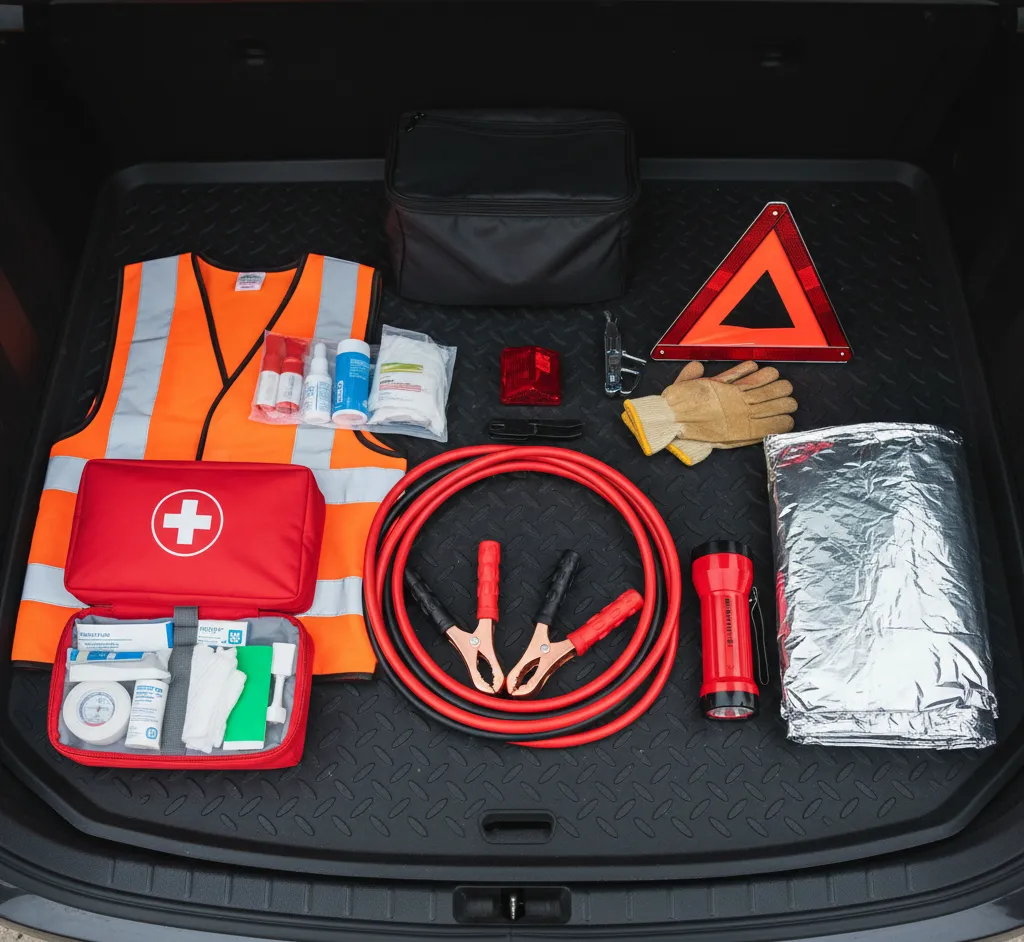
Why Every UK Car Needs an Emergency Kit
Breakdowns happen. Accidents happen. Getting stuck in snow on the M62 at midnight happens. A simple kit in your boot transforms these from crises into inconveniences.
What to Include
Breakdown Essentials
- Warning triangle — legally required in many European countries, sensible everywhere (~£5)
- Hi-vis vest — for visibility if you're out of the car at night (~£2)
- Jump leads — 3m heavy-duty cables (~£15)
- Tow rope — 3.5 tonne rated (~£10)
- Tyre inflator or spare tyre — many modern cars don't include a spare
- Basic tool kit — screwdrivers, pliers, adjustable spanner, duct tape (~£15)
Safety & Comfort
- First aid kit — Lifesystems Light & Dry Micro (~£10)
- Torch — with spare batteries (~£10)
- Emergency blanket — foil or proper blanket (~£5–12)
- Water — 2L minimum, replace every 6 months
- Non-perishable snacks — cereal bars, nuts
- Phone charger — 12V car charger + cable (~£8)
Severe Weather Additions
- Ice scraper and de-icer
- Small shovel — folding type
- Cat litter or sand — for traction on ice
- Warm clothing — spare hat, gloves, thick socks
- Waterproof jacket — even a cheap disposable poncho
Pre-Made Kit Recommendations
AA Emergency Kit — ~£25
A reasonable starter kit with warning triangle, torch, hi-vis, first aid basics and a few tools. Not comprehensive but a decent foundation to build on.
Pros: Convenient, covers basics, AA brand Cons: Cheap torch, basic first aid, missing jump leads
Ring RCT1 Emergency Kit — ~£35
Better than the AA kit — includes jump leads, tow rope and a more comprehensive tool set. Still worth adding your own torch and first aid kit.
Pros: Includes jump leads and tow rope, better tools, good bag Cons: First aid is minimal, torch quality is poor
Our DIY Car Kit (£50–80)
| Item | Cost |
|---|---|
| Warning triangle | £5 |
| Hi-vis vest (x2) | £4 |
| Jump leads (3m) | £15 |
| Tow rope (3.5t) | £10 |
| Lifesystems first aid | £10 |
| LED torch + batteries | £10 |
| Emergency blanket | £5 |
| 12V phone charger | £8 |
| Duct tape | £3 |
| Water (2L) | £1 |
| Cereal bars | £3 |
| Total | ~£74 |
Keep it all in a sturdy bag or plastic box in the boot. Check and restock every six months — especially water and food.
Recommended Products
AA Car Emergency Kit
Amazon UKWarning triangle, torch, hi-vis, first aid
1.5kg
Pros
- +Comprehensive basics
- +AA-branded quality
- +Compact storage bag
Cons
- −First aid kit is basic
- −No food or water
A solid foundation car kit from a trusted brand. Supplement with water, food and a blanket.
View dealAffiliate link — we may earn a small commission at no extra cost to you
RAC Winter Car Kit
Amazon UKBlanket, torch, shovel, de-icer, screen wash
Winter
Pros
- +Winter-specific items
- +De-icer and scraper included
- +Warm blanket
Cons
- −Seasonal focus
- −No first aid
Essential winter addition to your car emergency kit.
View dealAffiliate link — we may earn a small commission at no extra cost to you
Year-Round Car Kit Essentials
Keep in your boot permanently: warning triangle, hi-vis vest, torch with spare batteries, first aid kit, foil blanket, phone charger cable, 2L of water, energy bars, warm layer, waterproof jacket. Total cost: under 50 pounds. Total effort: one trip to Halfords.
Seasonal Additions
Winter: blanket, de-icer, scraper, small shovel, cat litter (for traction on ice), warm hat and gloves. Summer: extra water, sun cream, insect repellent.
Kit Organisation
A well-organised kit is usable in a hurry. Use colour-coded dry bags or labelled compartments so you can find what you need quickly, especially in emergencies where stress reduces your ability to think clearly. Practice locating items in your kit in the dark — you may need to use it at night during a power cut or emergency.
Regular Testing
Every item in your kit should be tested periodically. Torches need battery checks. Food needs rotation before expiry. Medications need expiry date verification. Water containers need cleaning. First aid supplies need replenishing after use. Set a calendar reminder every 6 months to audit your kit.
Scaling Your Kit
Start with the essentials and build up over time. You do not need to buy everything at once. The core of any emergency kit — water, food, warmth, light, first aid — can be assembled for under 50 pounds using items from Decathlon, Poundland, and your existing wardrobe. Add specialist items as budget allows. A basic kit today is infinitely better than a perfect kit you never get around to building.
Sharing Knowledge
Once you have built your kit, encourage family members and friends to do the same. Share what you have learned about practical preparedness. The UK government recommends every household should be able to sustain itself for 72 hours without external assistance. Most households are not prepared for even 24 hours. Be the exception.
Ready to gear up?
Use our kit builder to get a complete packout list tailored to your trip type, terrain, and budget — with prices and buy links.