This page contains affiliate links. If you purchase through them we may earn a small commission at no extra cost to you. Learn more
Best Water Filters and Purifiers for UK Hiking 2026
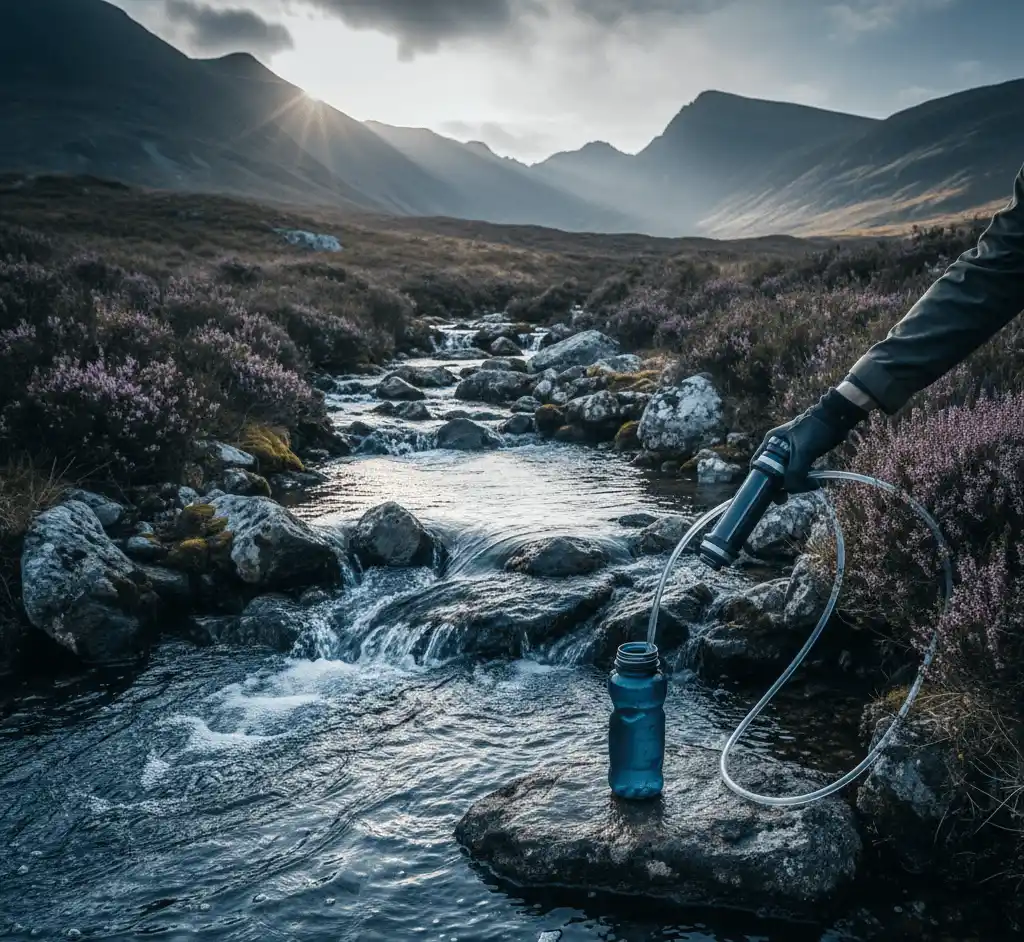
Do You Actually Need a Water Filter in the UK?
Yes — but the reasoning is different from backcountry travel abroad. UK streams and rivers look clean but can harbour Cryptosporidium, Giardia, E. coli and Campylobacter. Agricultural runoff, livestock upstream, and even wild animal faeces contaminate seemingly pristine mountain burns. The risk is low on any given drink, but over repeated trips, the odds catch up.
In Scotland's Highlands, water quality is generally excellent — many experienced hillwalkers drink from high burns without filtering. In England and Wales, agricultural land is more prevalent, and filtering is more strongly recommended. The further downstream you are and the more livestock around, the more important filtration becomes.
A filter weighs 50–150g and costs £20–100. Compared to a day laid up with gastroenteritis, it's a no-brainer for most people.
Filter Types Explained
Squeeze filters: Attach to a soft bottle or pouch, squeeze water through a hollow-fibre membrane. Fast, lightweight, no batteries. The most popular choice for UK hiking. Removes bacteria and protozoa but not viruses (rarely an issue in UK water).
Gravity filters: Hang a dirty water bag above a clean bag, gravity does the work. Brilliant for camp — fill it, hang it, do something else while it filters 2–4 litres. Heavier to carry than squeeze filters but effortless to use.
Pump filters: Manually pump water through a ceramic or hollow-fibre element. Old-school but reliable. Good for shallow water sources where you can't fill a squeeze pouch. Heavier and more expensive than squeeze alternatives.
Purifier bottles: All-in-one — fill the bottle, press the plunger, drink purified water. The Grayl GeoPress is the category leader. Removes viruses, bacteria, protozoa, chemicals and heavy metals. The most complete protection but heavier and more expensive.
Chemical treatment: Tablets (chlorine dioxide) or drops. Ultra-lightweight backup. Kills bacteria and most protozoa. Takes 30 minutes to 4 hours depending on the pathogen. Won't remove sediment or chemicals. Best as a backup rather than primary treatment.
UV purifiers: Battery-powered UV light kills pathogens. Fast (60 seconds per litre) but requires clear water, batteries and careful handling. Less common in the UK market.
UK Water Source Hierarchy
Not all water sources are equal. From safest to riskiest:
- Mountain springs and high-altitude burns (above livestock grazing): Lowest risk. Many Scottish hillwalkers drink directly from these, though filtering is still recommended.
- Fast-flowing streams below 300m: Moderate risk. Likely to have agricultural runoff upstream. Filter.
- Slow-moving rivers and lowland streams: Higher risk. More contamination from agriculture, sewage overflow, and wildlife. Always filter.
- Standing water (tarns, ponds, puddles): Highest pathogen concentration. Filter AND consider purification tablets as double protection.
Freezing Weather Warning
Hollow-fibre filters (Sawyer, Katadyn BeFree, LifeStraw) can be permanently damaged by freezing. Ice crystals rupture the microscopic hollow fibres, creating holes large enough for pathogens to pass through — and you can't tell by looking at it.
In winter, sleep with your filter inside your sleeping bag and keep it in an inside jacket pocket during the day. If you suspect it's frozen, replace it. Chemical tablets are immune to freezing and make a reliable winter backup.
Ready to gear up?
Use our kit builder to get a complete packout list tailored to your trip type, terrain, and budget — with prices and buy links.
Related reading
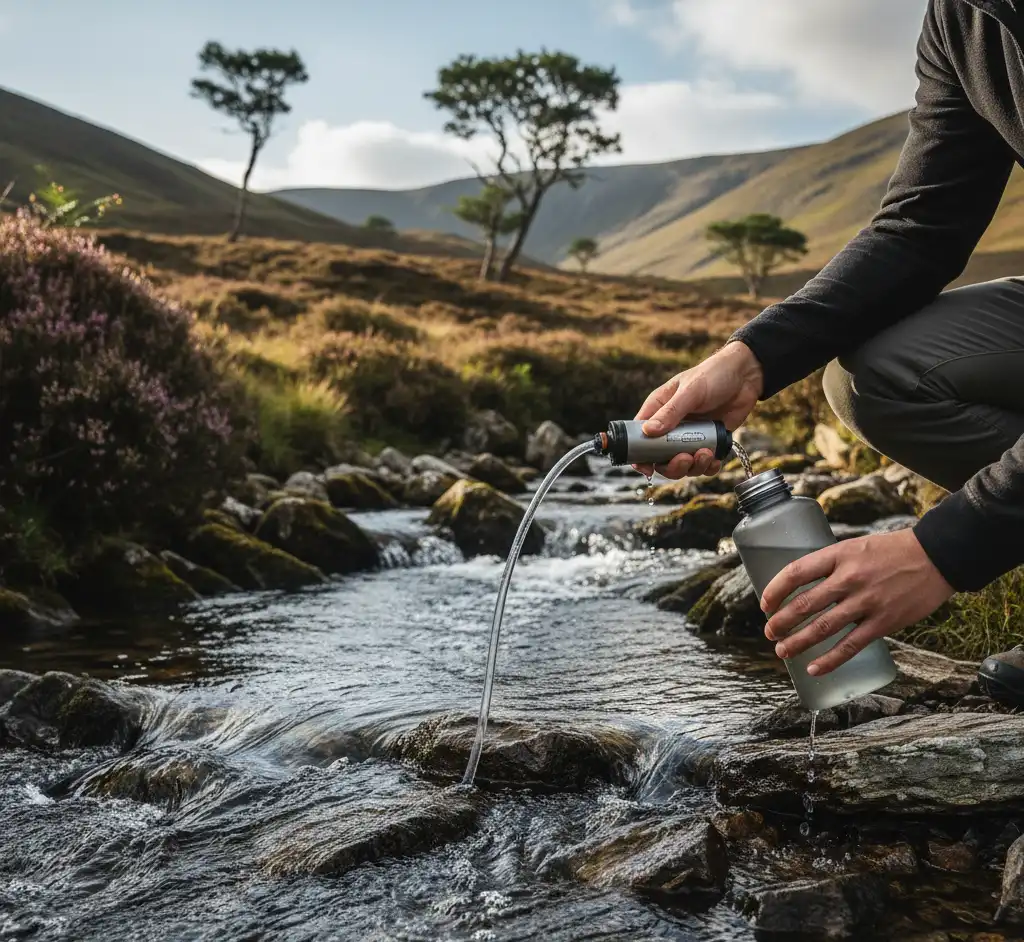
Water Purification Methods for UK Outdoor Survival
How to find and purify water in the UK outdoors — boiling, filters, purification tablets, and UV treatment for safe drinking water.
Bushcraft Courses in Northern England: Best Options
Top bushcraft and survival courses in the Lake District, Yorkshire, and Northumberland — what to expect, prices, and what you'll learn.
Best Bushcraft Courses in Scotland — Highlands & More
The best bushcraft and survival courses in Scotland for 2026. From Highland wilderness weekends to accessible day courses in the Lowlands.
Build your kit
Get a tailored packout list with prices and buy links.
Start building