This page contains affiliate links. If you purchase through them we may earn a small commission at no extra cost to you. Learn more
Pet Emergency Kit for UK Dog and Cat Owners — Guide 2026
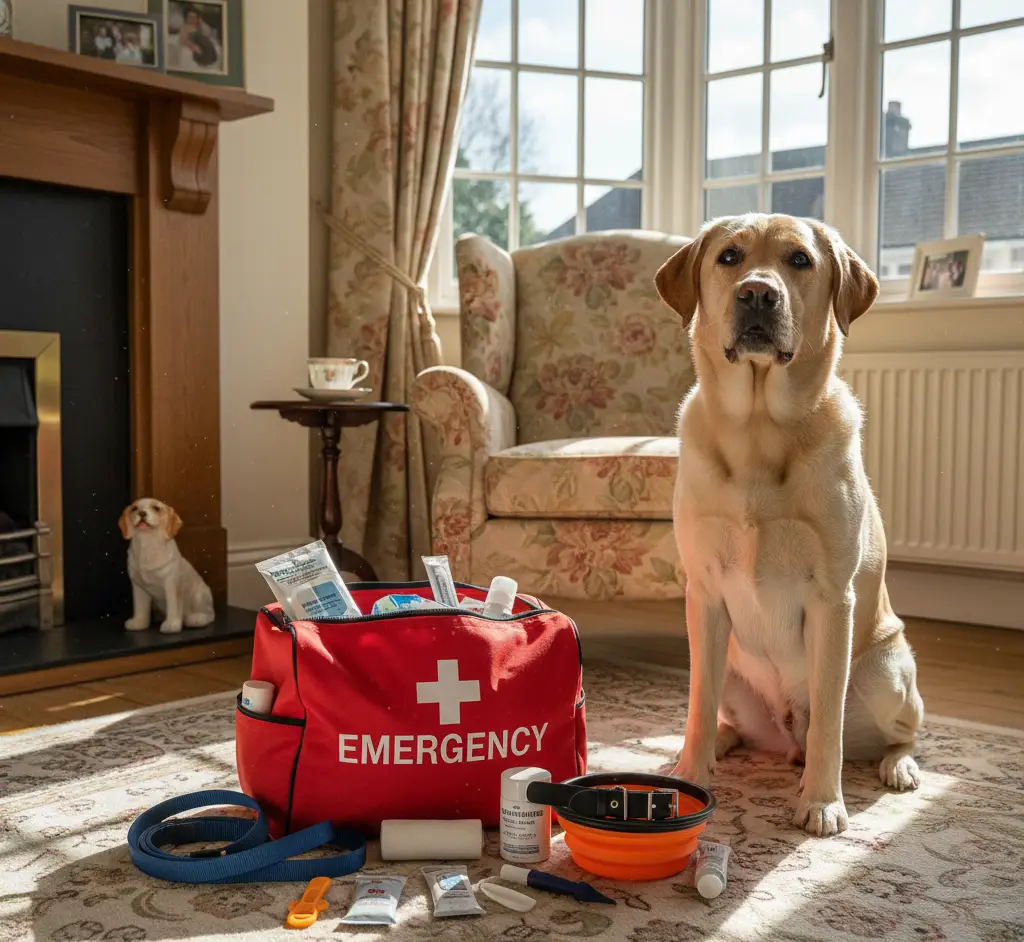
Why Pets Need Their Own Kit
In an evacuation, pets can't fend for themselves. And emergency shelters often can't accommodate animals easily. Having a pet kit ready means your animal is fed, watered and documented — which makes finding emergency housing much easier.
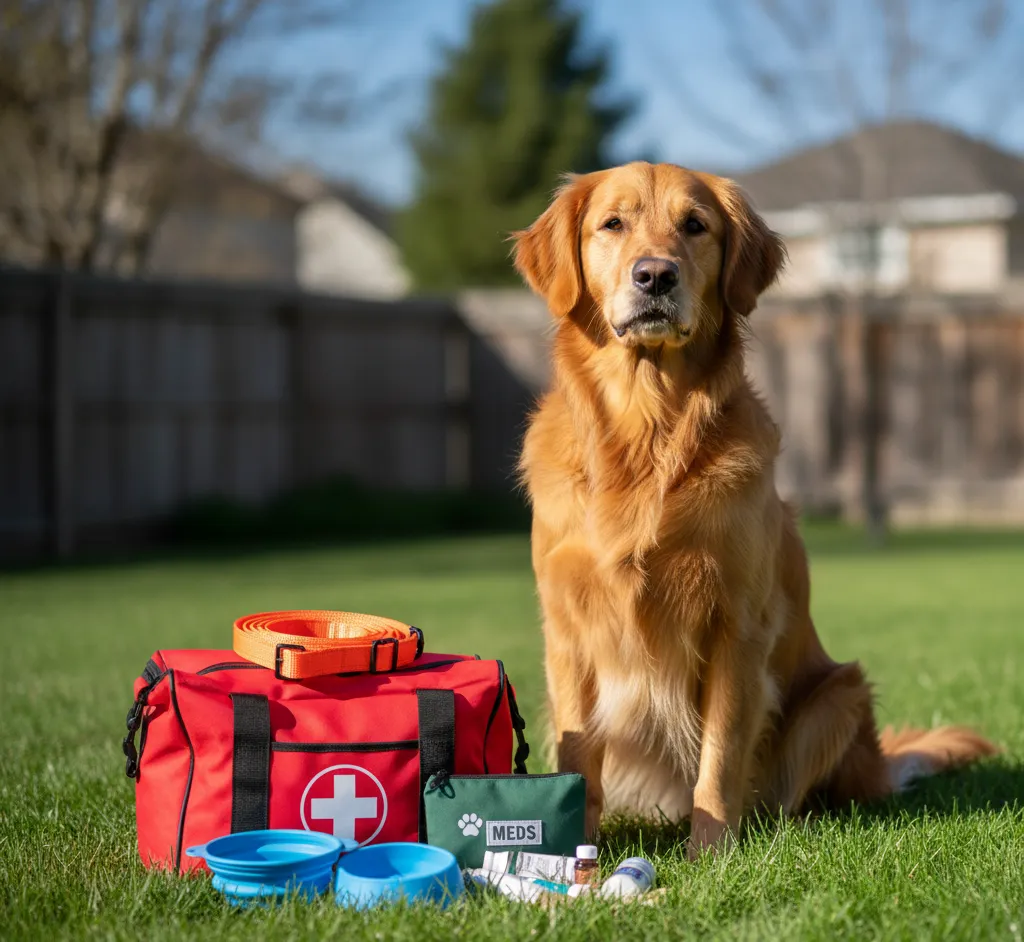
Dog Emergency Kit
Food & Water
- 3 days of dry food in sealed container
- Collapsible water bowl (~£3)
- 2L water
- Treats (stress relief and cooperation)
Health
- 7 days of any medications
- Copy of vaccination records
- Vet contact details
- Microchip number and registration details
- Recent photo of your dog (for identification)
- Pet first aid kit or additions to yours: bandages, antiseptic, tick remover
Equipment
- Sturdy lead and collar with ID tag
- Spare lead
- Muzzle (even if your dog doesn't usually need one — stress changes behaviour)
- Poo bags
- Towel
- Familiar toy or blanket (reduces stress)
Carrier/Crate
- For small dogs: a secure carrier
- For larger dogs: a car crate or harness that attaches to car seatbelt
Cat Emergency Kit
Everything above, adjusted for cats:
- Carrier — essential, with a blanket draped over to reduce stress
- Litter tray and litter — small travel tray and enough litter for 3 days
- Harness and lead — even if your cat isn't lead-trained, it prevents escape from a carrier
Important Documents to Include
- Proof of ownership
- Microchip details
- Vaccination records (especially rabies if you travel)
- Pet insurance policy number
- Emergency vet contact details
- Regular vet contact details
Where to Keep It
With your household grab bag or in a clearly labelled box near your emergency supplies. If you evacuate, grab both the human kit and the pet kit.
Emergency Pet Care Tips
- Never leave pets behind if you can avoid it — they can't fend for themselves
- Keep carriers accessible — a cat that knows it's going to the vet will hide; have the carrier ready before the situation escalates
- ID tags should have your mobile number — if you're evacuated, your home number is useless
- Familiar items reduce stress — a blanket that smells like home makes a massive difference
Recommended Products
Lifesystems Trek First Aid Kit
Amazon UK170g
30+
Pros
- +Bandages work for pets too
- +Compact
- +Widely available
Cons
- −No pet-specific items
- −Basic
Human first aid kit contents work for basic pet wound care too.
View dealAffiliate link — we may earn a small commission at no extra cost to you
Anker PowerCore 10000
Amazon UK10,000mAh
180g
Pros
- +Keeps phone charged for vet calls
- +Two charges
- +Reliable
Cons
- −Needs pre-charging
- −Basic
Phone access matters when your pet needs emergency veterinary help.
View dealAffiliate link — we may earn a small commission at no extra cost to you
Pet Emergency Kit Contents
- 3 days of pet food (rotate every 3 months)
- Collapsible water bowl and 3 days water
- Lead, collar with ID tag, and harness
- Copies of vaccination records and microchip details
- Any medications (7-day supply)
- Comfort item (favourite toy or blanket)
- Muzzle (even gentle dogs can bite when injured or stressed)
- Pet-safe antiseptic wipes
- Poo bags
- Recent photo of your pet (for lost pet notices)
Evacuation with Pets
Identify pet-friendly emergency accommodation in advance. Not all evacuation centres accept animals. Know your nearest 24-hour emergency vet. Keep your pets microchip details and vaccination records with your emergency documents.
Kit Organisation
A well-organised kit is usable in a hurry. Use colour-coded dry bags or labelled compartments so you can find what you need quickly, especially in emergencies where stress reduces your ability to think clearly. Practice locating items in your kit in the dark — you may need to use it at night during a power cut or emergency.
Regular Testing
Every item in your kit should be tested periodically. Torches need battery checks. Food needs rotation before expiry. Medications need expiry date verification. Water containers need cleaning. First aid supplies need replenishing after use. Set a calendar reminder every 6 months to audit your kit.
Scaling Your Kit
Start with the essentials and build up over time. You do not need to buy everything at once. The core of any emergency kit — water, food, warmth, light, first aid — can be assembled for under 50 pounds using items from Decathlon, Poundland, and your existing wardrobe. Add specialist items as budget allows. A basic kit today is infinitely better than a perfect kit you never get around to building.
Sharing Knowledge
Once you have built your kit, encourage family members and friends to do the same. Share what you have learned about practical preparedness. The UK government recommends every household should be able to sustain itself for 72 hours without external assistance. Most households are not prepared for even 24 hours. Be the exception.
Ready to gear up?
Use our kit builder to get a complete packout list tailored to your trip type, terrain, and budget — with prices and buy links.