This page contains affiliate links. If you purchase through them we may earn a small commission at no extra cost to you. Learn more
Best First Aid Supplies for UK Outdoor Adventures 2026
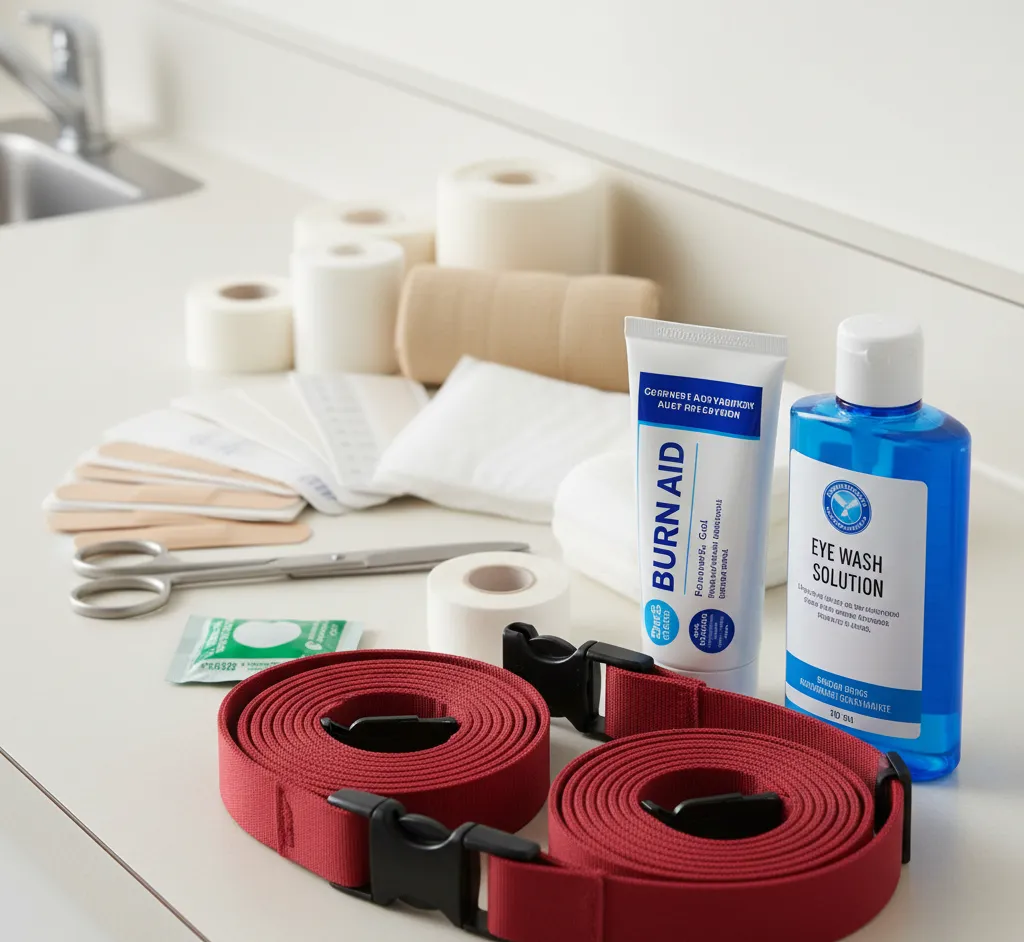
Why Build Your Own?
Pre-made kits include items you don't need and miss items you do. A custom kit is tailored to your activities, your group, and your medical knowledge.
Essential Components
Wound Care
- Adhesive plasters — assorted sizes, Leukoplast or Elastoplast (~£3)
- Wound closure strips (Steri-Strips) — for closing cuts without stitches (~£4)
- Sterile gauze pads — 7.5cm x 7.5cm, pack of 5 (~£2)
- Conforming bandage — 7.5cm, for securing dressings (~£2)
- Adhesive tape — Micropore or zinc oxide (~£3)
- Antiseptic wipes — Clinell or similar (~£3)
- Triangular bandage — sling, pad, or tourniquet (~£2)
Bleeding & Trauma
- Trauma dressing (Israeli bandage) — combines pad and pressure (~£5)
- Haemostatic gauze — Celox (~£10) — for serious bleeding
- Nitrile gloves — at least 2 pairs (~£2)
- Trauma shears — for cutting clothing and tape (~£5)
Musculoskeletal
- SAM splint — mouldable aluminium splint for fractures (~£8)
- Cohesive bandage (Coban) — self-sticking support wrap (~£3)
- Zinc oxide tape — for strapping, blisters and splint securing (~£4)
Blister Care
- Compeed blister plasters — assorted sizes (~£6)
- Moleskin — pre-cut shapes for hotspot prevention (~£4)
- Needle — sterilised, for draining blisters if needed
Medications
- Paracetamol — pain and fever (~£1)
- Ibuprofen — pain, swelling, inflammation (~£1)
- Antihistamine (Cetirizine) — allergic reactions, stings (~£2)
- Loperamide (Imodium) — diarrhoea (~£3)
- Rehydration sachets — Dioralyte (~£4)
- Personal prescriptions — asthma, allergy, diabetes etc.
Tools
- Tick remover — O'Tom Tick Twister (~£3)
- Pointed tweezers — for splinters (~£4)
- Safety pins — multiple uses (~£1)
- CPR face shield — barrier for rescue breaths (~£3)
- Pen and paper — for recording casualty info, times
Storage
- Waterproof case — Exped or dry bag (~£5–10)
- Organiser pouches — clear zip-locks for categories
Custom Kit by Activity
Day Walking Kit (~£30, 200g)
Plasters, wound closures, gauze, bandage, tape, antiseptic, Compeed, paracetamol, ibuprofen, antihistamine, tick remover, gloves
Multi-Day Backpacking Kit (~£45, 350g)
All of the above plus: SAM splint, trauma dressing, shears, cohesive bandage, loperamide, rehydration sachets, extra medications
Group Leader Kit (~£60, 500g)
All of the above plus: haemostatic gauze, extra supplies, CPR shield, notebook, pen, casualty card
Where to Buy
- Lifesystems — good quality outdoor-specific supplies
- Pharmacy — medications and basic supplies
- Amazon — individual components (check brands)
- St John Ambulance shop — quality supplies with training resources
- Wilderness Medical Training — UK-specific outdoor first aid courses (30+ years), kit recommendations geared to remote-environment use
- Military surplus — Israeli bandages and field dressings
Recommended Products
Lifesystems Adventurer First Aid Kit
Amazon UK300g
40+
Good size vs contents
Pros
- +Good middle ground
- +Better bandages than Trek
- +Reasonable price
Cons
- −Still missing some items
- −Not as comprehensive as Mountain Leader
The Goldilocks first aid kit - not too basic, not too heavy.
View dealAffiliate link — we may earn a small commission at no extra cost to you
Compeed Blister Plasters (Mixed)
Amazon UK5 mixed
Hydrocolloid
Mixed
Pros
- +Genuinely effective on blisters
- +Stays on for days
- +Cushions and heals
Cons
- −Expensive per plaster
- −Must apply early
The most effective blister treatment available. Apply at the first sign of a hot spot.
View dealAffiliate link — we may earn a small commission at no extra cost to you
Building a Custom Kit
For experienced hikers, a custom-built kit outperforms pre-made options. Start with a quality dry bag, then add: wound closures (Steri-Strips), conforming bandage, triangular bandage, trauma shears, SAM splint, Compeed, zinc oxide tape, antiseptic wipes, nitrile gloves, pain relief, antihistamines, and personal medications.
Storage and Maintenance
Check your kit every 6 months. Replace used items immediately after each trip. Check medication expiry dates. Ensure the pouch is intact and waterproof. Restock any items that have been opened or partially used.
Kit Organisation
A well-organised kit is usable in a hurry. Use colour-coded dry bags or labelled compartments so you can find what you need quickly, especially in emergencies where stress reduces your ability to think clearly. Practice locating items in your kit in the dark — you may need to use it at night during a power cut or emergency.
Regular Testing
Every item in your kit should be tested periodically. Torches need battery checks. Food needs rotation before expiry. Medications need expiry date verification. Water containers need cleaning. First aid supplies need replenishing after use. Set a calendar reminder every 6 months to audit your kit.
Scaling Your Kit
Start with the essentials and build up over time. You do not need to buy everything at once. The core of any emergency kit — water, food, warmth, light, first aid — can be assembled for under 50 pounds using items from Decathlon, Poundland, and your existing wardrobe. Add specialist items as budget allows. A basic kit today is infinitely better than a perfect kit you never get around to building.
Sharing Knowledge
Once you have built your kit, encourage family members and friends to do the same. Share what you have learned about practical preparedness. The UK government recommends every household should be able to sustain itself for 72 hours without external assistance. Most households are not prepared for even 24 hours. Be the exception.
Ready to gear up?
Use our kit builder to get a complete packout list tailored to your trip type, terrain, and budget — with prices and buy links.