This page contains affiliate links. If you purchase through them we may earn a small commission at no extra cost to you. Learn more
Best Emergency Shelter Options for UK Outdoors 2026
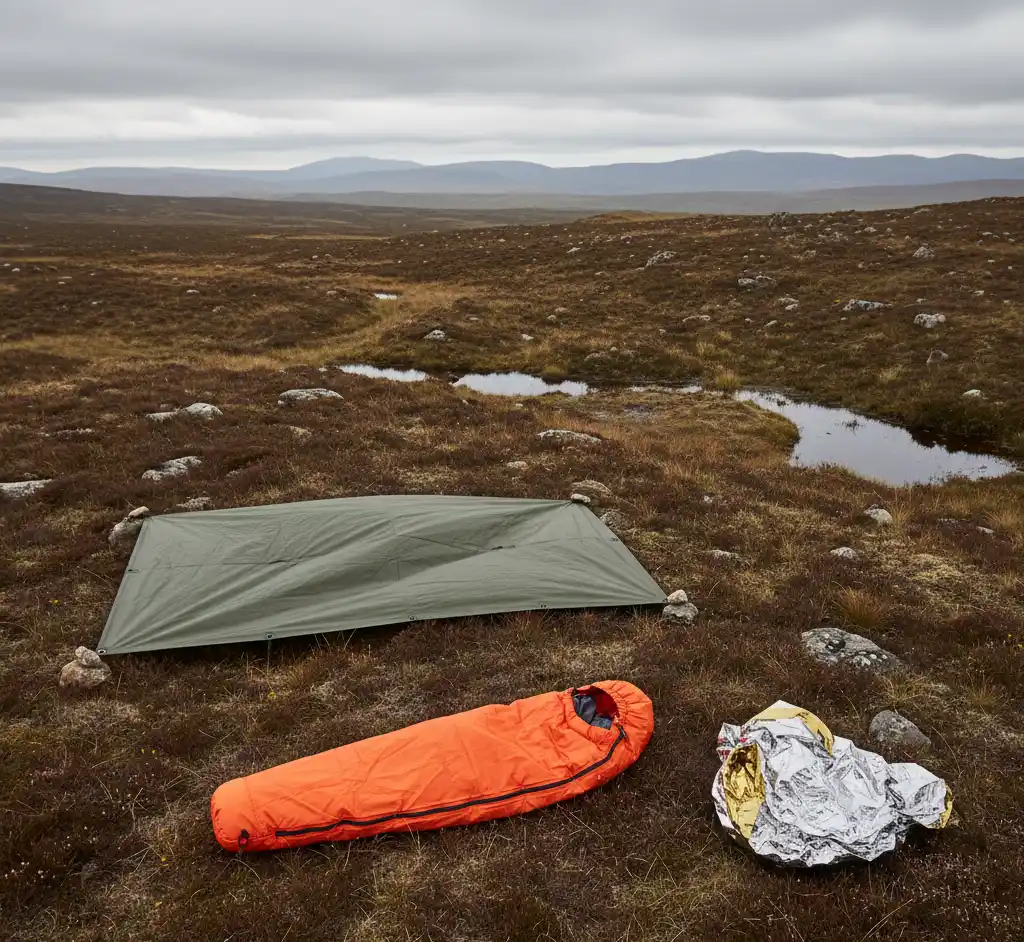
When You'd Need Emergency Shelter
- Injury preventing you or a companion from walking out
- Sudden severe weather making movement dangerous
- Navigation failure in poor visibility with darkness coming
- Hypothermia requiring immediate warming
The point isn't to camp — it's to survive the wait for rescue or improvement in conditions.
Emergency Shelter Options
1. Terra Nova Bothy Bag 2 — ~£40 (Best for Groups)
A tube-shaped shelter that two people sit inside. Pull it over your heads, sit on the edges to seal it, and body heat warms the space within minutes. Standard equipment for Mountain Leaders and recommended by Mountain Rescue.
Pros: Reusable, blocks wind completely, warms rapidly with body heat, proven Cons: Needs two people minimum to work best, 300g, condensation inside
2. SOL Emergency Bivvy — ~£12 (Best Solo Emergency)
Reflective sleeping bag shape, 120g, fits in a jacket pocket. Climb inside, seal the opening, and reflective interior retains body heat. Bright orange exterior for visibility.
Pros: Ultralight, cheap, reflective, high-visibility, fits in pocket Cons: Essentially single-use, horrific condensation, noisy, claustrophobic
3. Emergency Tarp (DD 3x3m) — ~£30 (Most Versatile)
Can create multiple shelter configurations with cord and trekking poles. More versatile than bivvies and bothy bags but requires skill and time to pitch.
Pros: Versatile, reusable, provides a proper shelter space, cooking cover Cons: Requires skill to pitch, heavier (790g), needs cord and poles/trees
4. Blizzard Survival Blanket — ~£15 (Best Heat Retention)
Multi-layer Reflexcell technology used by UK military and Mountain Rescue. Significantly warmer than standard mylar blankets. Can be wrapped around a casualty as a blanket or used as a bivvy.
Pros: Very warm, used by professionals, versatile use Cons: Heavier than mylar (280g), more expensive, bulkier
5. Building Natural Shelter
If you have no emergency shelter, natural materials can save your life:
- Stone wall lee side — immediate wind protection
- Fallen tree — natural ridgepole for debris shelter
- Dense conifer woodland — natural wind and rain break
- Snow hole — surprisingly warm in winter conditions (needs experience)
Carry Recommendation
| Walking Situation | Minimum Shelter |
|---|---|
| Lowland day walk | SOL Emergency Bivvy |
| Mountain day walk | Bothy Bag 2 |
| Solo mountain walk | Emergency Bivvy + tarp |
| Winter mountain | Bothy Bag + emergency bivvy |
Using Emergency Shelter Effectively
- Get out of the wind first — shelter behind a wall, ridge, or boulders
- Insulate from the ground — sit on your rucksack, foam mat, rope — anything
- Group together — body heat is your best warmth source
- Eat and drink — your body needs fuel to generate heat
- Stay calm — panic burns energy and makes everything worse
- Call for help early — don't wait until the situation is desperate
Recommended Products
SOL Emergency Bivvy
Amazon UK120g
Reflective polyethylene
Orange
Pros
- +120g fits anywhere
- +Reflects 90% body heat
- +Orange for visibility
Cons
- −Single-use
- −Condensation terrible
Twelve pounds of genuine life insurance.
View dealAffiliate link — we may earn a small commission at no extra cost to you
Terra Nova Bothy Bag 2
Amazon UK300g
2 person
Yes
Pros
- +Reusable
- +Complete wind block
- +Mountain Rescue standard
Cons
- −Heavier
- −Best with two people
The emergency shelter Mountain Rescue teams carry.
View dealAffiliate link — we may earn a small commission at no extra cost to you
DD Hammocks 3x3 Tarp
Amazon UK790g
3x3m
3,000mm
Pros
- +Versatile shelter options
- +Lightweight
- +Multiple pitch configurations
Cons
- −Requires practice
- −Needs cord and pegs
The most versatile emergency shelter for woodland and camps.
View dealAffiliate link — we may earn a small commission at no extra cost to you
Shelter Priority in Emergencies
Shelter is the number one survival priority in UK conditions. Hypothermia kills faster than dehydration or hunger. In an emergency: 1) Get out of wind and rain, 2) Insulate from ground, 3) Retain body heat, 4) Signal for help. Even a bin bag over your head and torso blocks wind and retains warmth.
Emergency Shelter Options by Scenario
- Mountain emergency: SOL Emergency Bivvy + Terra Nova Bothy Bag
- Woodland: DD Tarp in a-frame configuration
- Urban evacuation: Emergency blanket + waterproof jacket
- Vehicle breakdown: Stay in the car, run engine briefly for heat, crack window for ventilation
Kit Organisation
A well-organised kit is usable in a hurry. Use colour-coded dry bags or labelled compartments so you can find what you need quickly, especially in emergencies where stress reduces your ability to think clearly. Practice locating items in your kit in the dark — you may need to use it at night during a power cut or emergency.
Regular Testing
Every item in your kit should be tested periodically. Torches need battery checks. Food needs rotation before expiry. Medications need expiry date verification. Water containers need cleaning. First aid supplies need replenishing after use. Set a calendar reminder every 6 months to audit your kit.
Scaling Your Kit
Start with the essentials and build up over time. You do not need to buy everything at once. The core of any emergency kit — water, food, warmth, light, first aid — can be assembled for under 50 pounds using items from Decathlon, Poundland, and your existing wardrobe. Add specialist items as budget allows. A basic kit today is infinitely better than a perfect kit you never get around to building.
Sharing Knowledge
Once you have built your kit, encourage family members and friends to do the same. Share what you have learned about practical preparedness. The UK government recommends every household should be able to sustain itself for 72 hours without external assistance. Most households are not prepared for even 24 hours. Be the exception.
Ready to gear up?
Use our kit builder to get a complete packout list tailored to your trip type, terrain, and budget — with prices and buy links.