This page contains affiliate links. If you purchase through them we may earn a small commission at no extra cost to you. Learn more
Best Hiking Footwear for UK Walking and Backpacking 2026
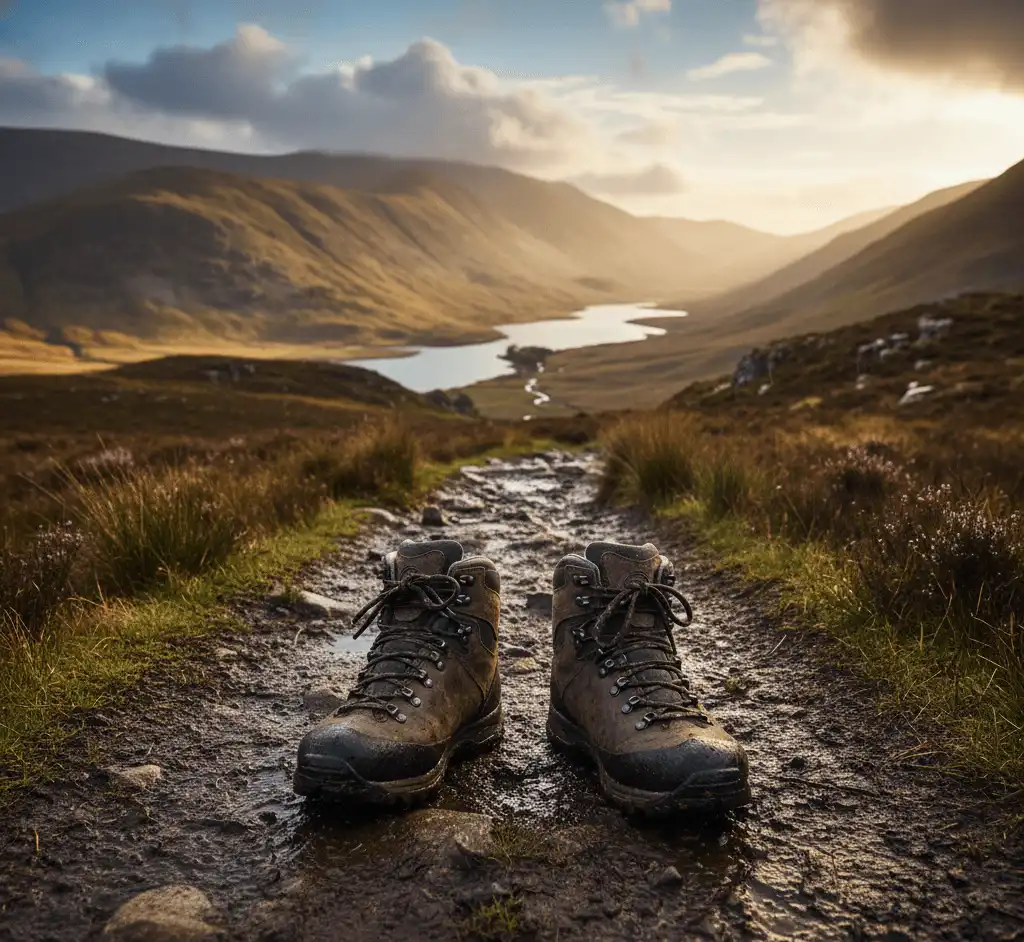
Choosing Hiking Footwear for UK Conditions
The UK is wet. That's the single biggest factor in choosing walking footwear here. Unlike continental Europe where you might get weeks of dry trail, British paths are muddy, boggy and rain-soaked for roughly eight months of the year. Your footwear needs to handle that.
The old advice was always "buy heavy leather boots" — that's outdated. Modern lightweight boots with Gore-Tex membranes keep water out while weighing half as much. Trail runners have become legitimate hiking footwear too, especially for summer day walks and ultralight backpacking. The right choice depends on your terrain, pack weight and ankle confidence.
Boot Types Explained
Mid-height waterproof boots: The default for UK hillwalking. Ankle support for rough terrain, waterproof membranes for bog and rain, stiff enough soles for rocky paths. This is what most people should buy first.
Low-cut hiking shoes: Lighter and more agile than boots. Good for well-maintained paths and day walks. Less ankle support and more vulnerable to water ingress through the collar in deep mud or stream crossings.
Trail runners: Running shoes designed for off-road use. Increasingly popular with ultralight hikers and fell runners. Fast-draining rather than waterproof — they get wet but dry quickly. Terrible for winter hillwalking, brilliant for summer.
Approach shoes: Hybrid between hiking shoes and climbing shoes. Sticky rubber soles grip rock exceptionally well. Niche — really only worth it if you're regularly scrambling on rocky terrain like Snowdonia ridges or Cuillin traverses.
UK-Specific Buying Advice
Try before you buy. Foot shape varies enormously. Salomon runs narrow, Altra runs wide, Merrell is middle-of-the-road. Visit a shop — Go Outdoors, Cotswold Outdoor, or Decathlon — and try boots on with your hiking socks in the afternoon when your feet are slightly swollen.
Waterproof vs water-resistant. In the UK, you want waterproof (Gore-Tex, eVent, or similar membrane) for three-season use. "Water-resistant" leather boots will soak through on a wet Pennine Way day. The exception is trail runners — these dry so fast that waterproofing becomes counterproductive.
Break them in. Even modern boots need 20–30 miles of wear before a serious trip. Start with short local walks and build up. Blisters from new boots on day one of a multi-day trip can ruin the whole thing.
Sole stiffness matters. Stiff soles (like the Lowa Renegade) handle rocky terrain and heavy packs better. Flexible soles (like the Merrell Moab) are more comfortable on gentle paths but transfer every rock underfoot on rough ground. Match the stiffness to your terrain.
When to Choose Trail Runners Over Boots
Trail runners make sense if you: hike primarily May–September, carry a light pack (under 8kg), stick to established paths, and don't mind wet feet. They're faster, lighter and more comfortable on long-distance paths like the South West Coast Path or Pennine Way in summer.
Stick with boots if you: hike year-round, carry heavy packs, walk on rough off-trail terrain, or want maximum ankle protection on rocky mountain paths.
Ready to gear up?
Use our kit builder to get a complete packout list tailored to your trip type, terrain, and budget — with prices and buy links.