This page contains affiliate links. If you purchase through them we may earn a small commission at no extra cost to you. Learn more
Campfire Law in the UK — When and Where Fires Are Legal
Legal disclaimer
This is general information, not legal advice. Laws change — verify current legislation before acting on anything you read here.
Quick Summary
- There's no blanket ban on campfires in the UK, but you almost always need landowner permission
- Fires are restricted on CRoW Act access land in England and Wales
- Letting a fire spread can be a criminal offence under arson laws
Is It Legal to Light a Campfire?
There's no single "campfire law" in the UK. Instead, whether you can light a fire depends on where you are, who owns the land, and what rules apply to that specific area.
The general position: you can light a fire if the landowner has given you permission. Without permission, you're likely breaking rules — even if there's no one around to see it.
CRoW Act Access Land
On access land designated under the Countryside and Rights of Way Act 2000, fires are restricted. Section 2 of the Act sets out the right of access, and Schedule 2 lists restrictions — including a prohibition on lighting or tending fires that could damage or endanger the land.
In practice, this means: no campfires on access land unless the landowner has specifically permitted them.
Private Land With Permission
If you have the landowner's permission to light a fire, you're on solid ground legally. Many farms, estates, and private woodlands are happy for responsible visitors to have small campfires — just ask.
When you have permission, you should still:
- Keep the fire small and contained
- Use existing fire rings if available
- Never leave a fire unattended
- Fully extinguish before leaving
- Avoid lighting fires in dry or windy conditions
Forestry Commission and Forestry England
Forestry England (and equivalents in Scotland and Wales) generally does not permit open fires on its land. This includes forest floors, clearings, and car park areas. The risk of forest fire is the primary concern.
Some Forestry England campsites have designated fire pits or barbecue areas — but these are specific permissions, not a general rule.
Forest fires can spread with terrifying speed, especially in conifer plantations. A carelessly left campfire that spreads could result in criminal charges for arson — and cause catastrophic environmental damage.
National Parks
Each national park has its own position on campfires:
- Most English and Welsh national parks: Campfires are discouraged or prohibited on open land. Check the specific park's guidance.
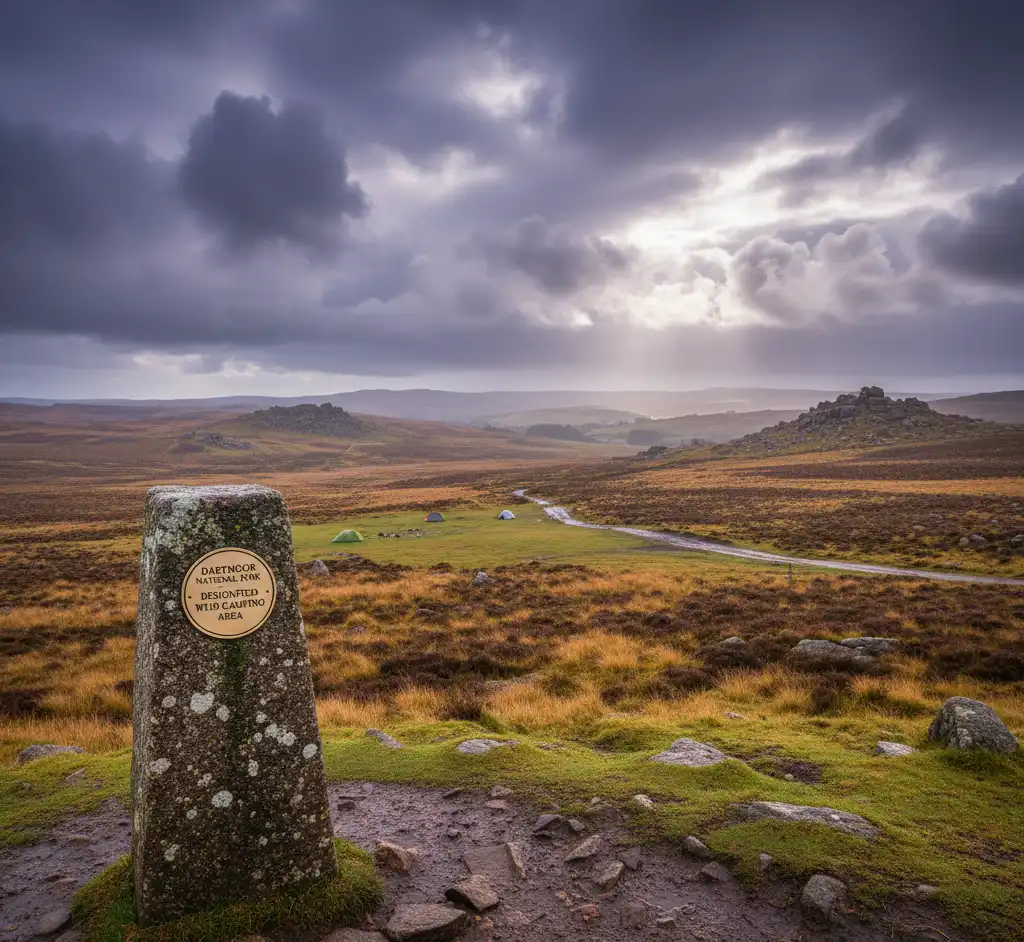
- Dartmoor: No open fires anywhere on the registered commons under DNPA byelaws, even with the statutory right to backpack camp confirmed by the Supreme Court in May 2025. Use a gas stove.
- Cairngorms National Park (Scotland): A formal Fire Management Byelaw came into force on 1 April 2026 and runs 1 April–30 September each year. It bans open fires AND barbeques — including disposable BBQs — across the entire 1,748 sq mile park, including Aviemore and Braemar. Penalty on conviction is up to £500. The byelaw overrides the general Scottish Outdoor Access Code permission for the Cairngorms during the fire season.
- Scottish national parks (outside Cairngorms fire season): The Scottish Outdoor Access Code permits responsible fires — see our [Scottish wild camping guide](/guides/uk-law-safety/wild-camping-law-scotland). Peat ground, dry conditions, and proximity to woodland are all reasons not to light up.
- Loch Lomond & The Trossachs: Camping Management Byelaws operate in the lochshore camping zones from 1 March–30 September. Fires are restricted in those zones — check zone-specific rules before lighting.
The Cairngorms fire byelaw is a real legal instrument, not guidance. It applies to the full park for half the year and explicitly includes disposable BBQs. Rangers issue fixed penalties. When in any doubt, use a gas stove.
Beach Fires
Beach fires are popular in summer, but they're not automatically legal:
- Many councils have bylaws prohibiting fires on beaches
- Some beaches allow fires in designated areas
- Leaving hot coals buried in sand is genuinely dangerous — people burn their feet every year
- Always check local council rules before lighting a beach fire
Fire Pits and Raised Fires
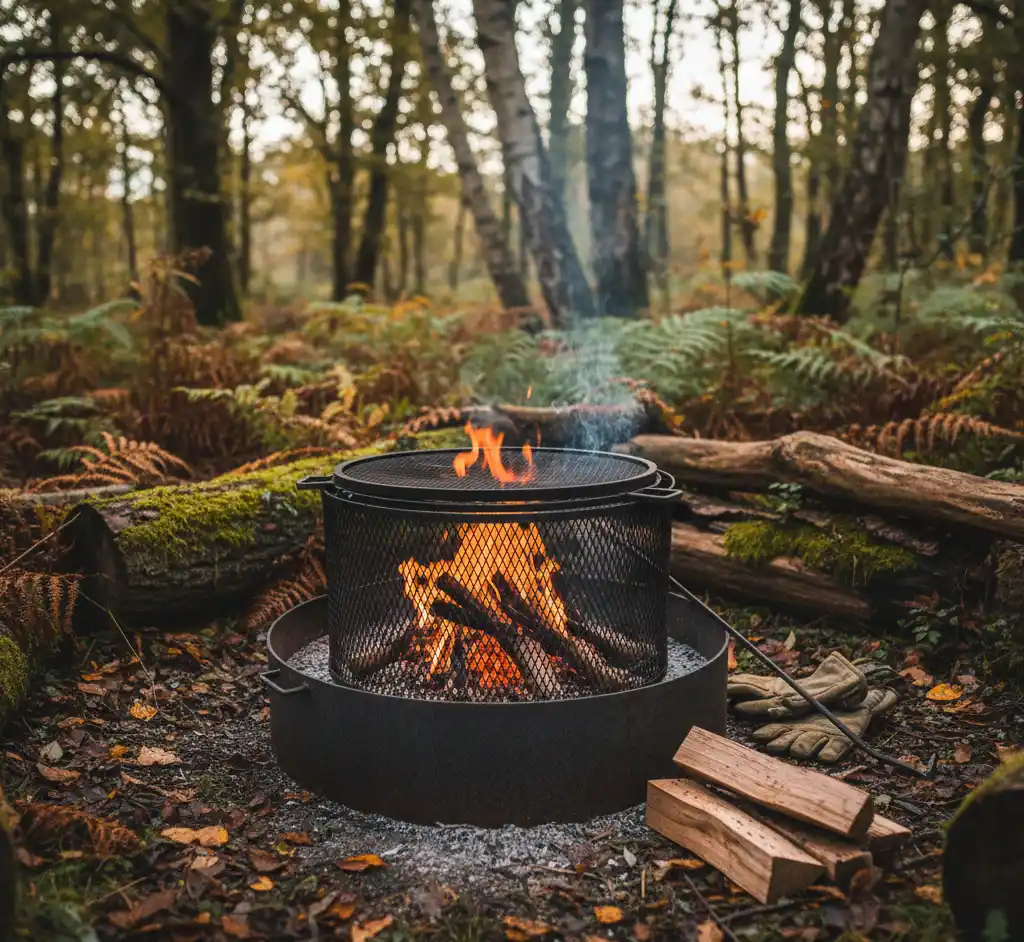
Using a fire pit or raised fire platform minimises ground damage and is often more acceptable to landowners. If you're wild camping and hoping to cook over fire, a portable fire pit that raises the fire off the ground is a much more responsible option.
However, a fire pit doesn't change the legal position — you still need to be somewhere fires are permitted.
When a Fire Becomes Criminal
If a fire you light gets out of control and damages property, vegetation, or other people's land, you could face:
- Criminal damage charges under the Criminal Damage Act 1971
- Arson charges if the fire was lit recklessly or the damage was serious
- Civil liability for the cost of firefighting, land restoration, and third-party damages
Even a well-intentioned campfire that spreads due to wind or dry conditions can result in serious legal consequences for the person who lit it.
Practical Tips
- Ask first. If there's a landowner or manager, ask permission. Most appreciate being asked.
- Use a stove instead. For cooking, a camping stove is more practical, legal, and environmentally friendly than a campfire in most situations.
- If you do light a fire: Keep it small. Use dead wood. Clear the area around it. Never leave it unattended. Fully extinguish with water (not soil — soil insulates rather than extinguishes).
- Never light fires on peat. Peat fires can burn underground for days or weeks and are extraordinarily difficult to extinguish.
- Check fire risk warnings. During dry spells, fire risk can be extreme. Responsible campers don't light fires when conditions are dangerous, regardless of whether they technically can.
A good camping stove weighs less than the firewood you'd need to collect, boils water faster, works in any weather, and leaves no trace. For most outdoor cooking, it's the better choice.
Leave No Trace Fire Practice
If you do have permission to light a fire, responsible fire management matters for both legal protection and environmental reasons. The Leave No Trace principles for fires are straightforward:
- Use an existing fire ring where one exists. Creating a new scar on the ground adds cumulative damage.
- Keep your fire small — no bigger than you need. A small fire cooks food just as well and is far easier to control and extinguish.
- Burn wood down to ash. Partially burned logs leave an ugly mess. Let them burn fully or remove them.
- Scatter cold ashes widely once the fire is completely out. The site should look as close to undisturbed as possible.
- Never build a fire ring from rocks on open land. It creates a permanent scar that invites others to build bigger fires in the same spot.
Understanding these practices doesn't just protect the environment — it demonstrates responsibility to landowners who may be deciding whether to continue allowing fires on their land.
Recommended Gear for Legal, Leave-No-Trace Cooking
Given the legal restrictions on campfires across most of the UK, a lightweight stove is the practical solution for outdoor cooking. These options let you cook anywhere without needing fire permission.
Petzl Actik Core Headtorch
Amazon UK600
88g
Rechargeable CORE + AAA backup
IPX4
Pros
- +Brilliant for finding and managing campsites in the dark
- +Rechargeable with AAA backup
- +Red light mode preserves night vision
Cons
- −Battery life drops at full brightness
Essential for any camp setup — hands-free lighting makes fire management (and everything else at camp) safer and easier.
View dealAffiliate link — we may earn a small commission at no extra cost to you
Alpkit Kraku Stove
Amazon UK45g
Screw-on gas canister
3 min (500ml)
Palm-sized
Pros
- +Incredibly light and compact
- +No fire permission needed
- +Boils water fast
Cons
- −No windshield included
- −Lightweight pot supports need care
A pocket-sized stove that removes the legal headache of campfire cooking entirely. Pair it with a small gas canister and you can cook anywhere.
View dealAffiliate link — we may earn a small commission at no extra cost to you
Alpkit Hunka Bivvy Bag
Amazon UK345g
Waterproof breathable
220 × 80cm
15 × 8cm
Pros
- +Ultralight and compact
- +Waterproof enough for overnights
- +Removes the need for a tent on simple camps
Cons
- −Condensation can build up on cold nights
If you're camping light and legal, a bivvy bag lets you sleep out without a tent — perfect for no-trace camps where fires aren't an option.
View dealAffiliate link — we may earn a small commission at no extra cost to you
Related Guides
Ready to gear up?
Use our kit builder to get a complete packout list tailored to your trip type, terrain, and budget — with prices and buy links.
Related reading
UK Outdoor Law and Safety — Your Complete Practical Guide
A plain-English guide to UK outdoor laws covering wild camping, knife law, foraging, right to roam, drones, and campfires.
Wild Camping Law in England & Wales: What's Actually Legal
The legal position on wild camping in England and Wales — trespass, landowner permission, and how to camp responsibly without getting moved on.
Wild Camping Law in Scotland: Your Right to Roam and Camp
Scotland's wild camping rights under the Land Reform Act 2003 and Scottish Outdoor Access Code — what you can do, where you can camp, and your responsibilities.
Wild Camping on Dartmoor: The Law After the Supreme Court's 2025 Ruling
The current legal position on wild camping on Dartmoor after the Supreme Court's May 2025 ruling — Dartmoor Commons Act 1985, byelaws, and where you can camp.