This page contains affiliate links. If you purchase through them we may earn a small commission at no extra cost to you. Learn more
Autumn Camping Gear UK: Kit for September–November
Why Autumn Camping Is Worth It
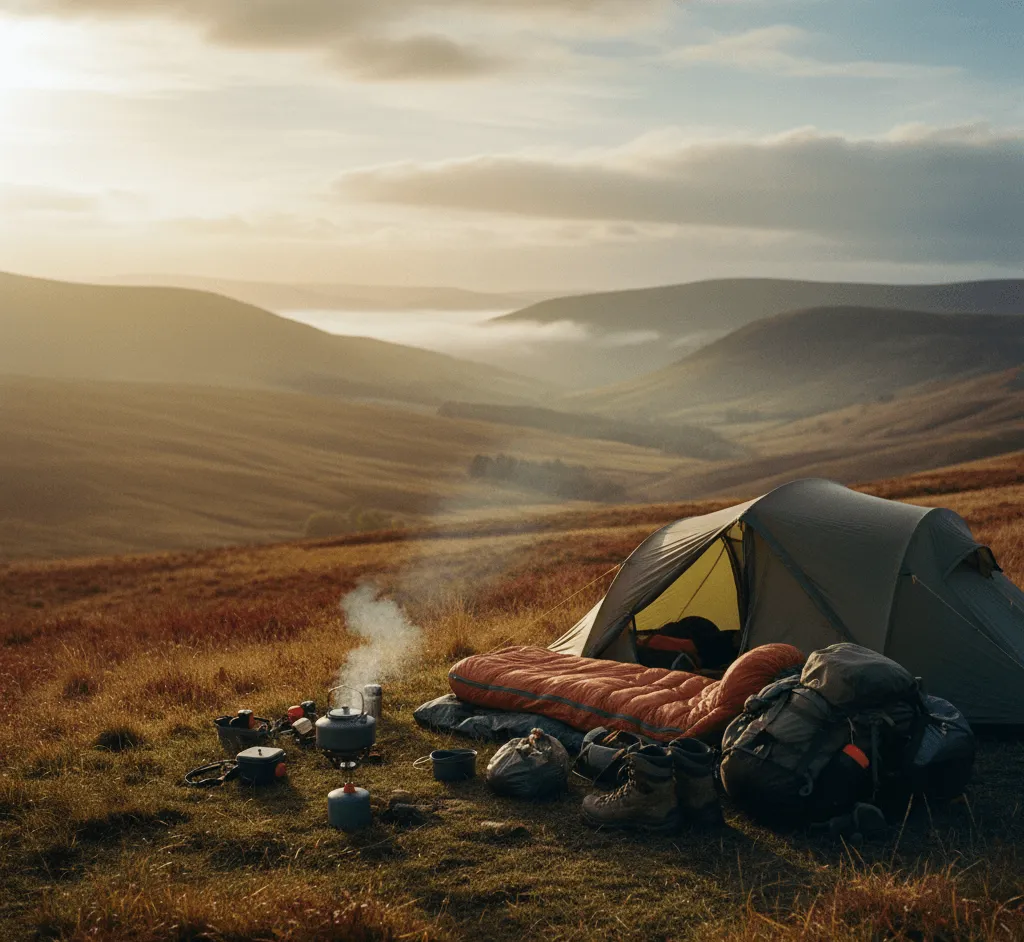
September and October in the UK are genuinely brilliant for camping. The midges are gone (or mostly gone), the summer crowds have evaporated from popular trails, the light is golden and low, and the air has that cold clarity that makes hills look spectacular. If you camp at all in the UK, autumn should be on your calendar.
The challenge is that conditions deteriorate fast. October nights can be cold, November can be brutal, and the window of usable daylight shrinks noticeably week by week. Pack accordingly, and you'll have some of the best camping experiences of your year.
Sleeping System: The Critical Upgrade
This is where autumn camping catches people out. Summer bags rated to +10°C comfort feel dangerously cold on an October night in the Cairngorms, Brecon Beacons or even the Peak District. The minimum for UK autumn camping:
- Sleeping bag comfort rating: -5°C (not lower limit — comfort rating)
- Sleeping mat R-value: 3.5–4
The Rab Ascent 500 (~£185) is a synthetic bag with -5°C comfort that handles the dampness of autumn conditions well. Down bags are warmer for weight but synthetic makes more sense in autumn when tent condensation is significant and the bag may see some moisture.
If you already own a three-season sleeping bag rated to -2°C, a thermal liner (Sea to Summit Thermolite Reactor at ~£35) buys you 4-5°C of extra warmth without replacing the whole bag. It's a cost-effective bridge into autumn conditions.
For sleeping mats, autumn ground is cold, often damp, and saps heat efficiently. The Thermarest Trail Pro (~£90) at R4 is a practical self-inflating mat that handles autumn temperatures comfortably. Pair it with a thin foam sit pad as backup — if your inflatable develops a slow leak at 2°C, foam is your insurance.
Shelter: Three-Season Tents Earn Their Keep
Autumn weather brings genuine wind and sustained rain. Your tent needs to handle both:
- Double-skin construction — essential for managing condensation in cool, damp conditions
- Good vestibule — cooking and boot storage outside the sleeping area becomes more important as conditions deteriorate
- Robust pole system — autumn storms are real
The MSR Hubba Hubba (£480) is the tent that serious three-season campers keep returning to. It's expensive but the design handles wind exceptionally well, pitches efficiently in bad weather, and has enough vestibule space to manage wet kit properly. For a more affordable option, the Vango Banshee 200 (£200) is a strong two-person autumn tent that has been tested in genuinely grim UK conditions.
Pitch placement becomes more critical in autumn. Seek natural windbreaks, avoid gullies that funnel wind, and think about morning sun to help dry a condensation-covered tent before packing.
Clothing: Adding the Mid-Season Layer
Autumn is where the layering system gets more complex. The gap between active temperature and stationary temperature widens significantly — you might be comfortable in a base layer and fleece while moving uphill, then need every layer you have within ten minutes of stopping.
Key autumn additions to a summer wardrobe:
- Heavyweight fleece or synthetic insulation mid-layer — Rab's Nexus Fleece (~£100) is an excellent mid-layer that provides real warmth without excessive weight
- Insulated jacket for camp — down or synthetic, for when you stop moving. The Alpkit Filo Down Hoody (~£120) works well as a camp layer in September and October
- Waterproof trousers — non-negotiable from October onwards. Berghaus Deluge trousers (~£40) are cheap and effective
- Warmer hat and gloves — not full winter kit, but a warm beanie and light liner gloves from October
Hands get cold quickly when wet. A pair of lightweight liner gloves (Berghaus Spectrum at ~£20) is cheap insurance against cold, damp October mornings.
Lighting: Short Days Require Planning
The shift from summer to autumn daylight is dramatic. In Scotland, usable light is gone by 6pm in October. In England, by 7pm. If you're relying on daylight to navigate to your pitch and set up camp, you have a narrowing window.
A reliable head torch is essential kit from September. The Black Diamond Spot 400-R (~£45) is a rechargeable head torch with 400 lumens and a reliable battery indicator. The rechargeable battery is a meaningful advantage over disposable AA options — one USB charge before you set off, and you know exactly what you have.
Carry spare batteries for any non-rechargeable torch, or a power bank for rechargeable options. Cold batteries lose capacity faster than warm ones — keep the torch in a warm inner pocket on cold nights.
Rain and Mud Management
Autumn conditions in the UK mean persistent ground moisture, soft paths and mud from September onwards. A few practical gear additions:
- Short trail gaiters — keep mud and debris out of boot tops without the bulk of mountaineering gaiters. Outdoor Research Flex-Tex II (~£35) are lightweight and effective
- Dry bags — sleeping bag and spare clothing should always be in dry bags. Alpkit Ultralite Drybag at ~£8 each
- Groundsheet footprint — autumn ground is wetter and more likely to damage tent floors. A footprint adds weight but extends tent lifespan significantly
Dry bags are something people regret not having the first time their pack gets properly soaked in a long rain crossing. Buy them before autumn camping.
Cooking in Autumn Conditions
Autumn evenings are cold enough to make cooking inefficiency noticeable. A few adjustments:
- Wind shield — standard stoves work significantly better with even a simple windshield. MSR makes folding windshields for ~£12
- Isobutane/propane gas canisters — perform better in cold than pure butane. Look for 70/30 or 80/20 mixes
- Insulated mug — keeps drinks warm long enough to drink them at a cold camp
A hot meal and a warm drink before sleep are disproportionately important to morale on cold autumn nights. Budget time and fuel accordingly.
Autumn Camping Gear Summary
| Category | Minimum | Upgrade |
|---|---|---|
| Tent | Vango Banshee 200 (~£200) | MSR Hubba Hubba (~£480) |
| Sleeping bag | Rab Ascent 500 (-5°C, ~£185) | Rab Neutrino 400 (down, ~£280) |
| Sleeping mat | Alpkit Numo (~£85, R3.5) | Thermarest Trail Pro (~£90, R4) |
| Head torch | Petzl Actik (~£35) | Black Diamond Spot 400-R (~£45) |
| Waterproofs | Berghaus Paclite + Deluge (~£170) | Paramo Alta III (~£270) |
Autumn camping punishes underprepared gear more than any other season — not because conditions are the most severe, but because the combination of cold ground, persistent rain, and short days exposes any weakness in your kit. Gear up properly and it's genuinely brilliant.
Ready to gear up?
Use our kit builder to get a complete packout list tailored to your trip type, terrain, and budget — with prices and buy links.