This page contains affiliate links. If you purchase through them we may earn a small commission at no extra cost to you. Learn more
Best Hiking Socks for UK Trails and Backpacking 2026
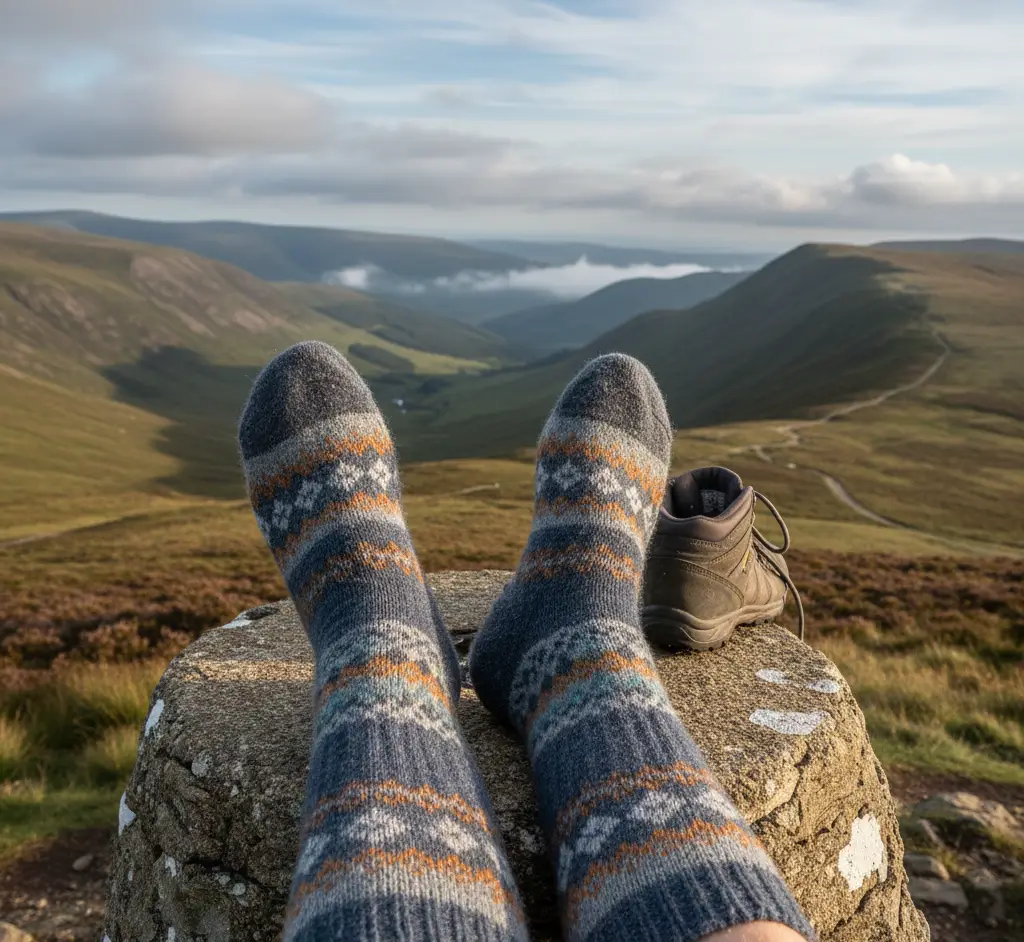
Why Good Socks Matter More Than Good Boots
Controversial opinion: your socks matter more than your boots. Cheap boots with great socks will blister you less than great boots with cheap socks. Cotton socks are the number one cause of blisters on the trail — they absorb sweat, bunch up, and create friction.
Good hiking socks wick moisture, cushion impact, reduce friction, and regulate temperature. They're the interface between your skin and your boot, and getting that interface right is the single most effective thing you can do to prevent blisters.
Top 5 Hiking Socks
1. Darn Tough Hiker Micro Crew — ~£22 (Best Overall)
Merino wool blend, made in Vermont, lifetime guarantee. They're comfortable from day one, manage moisture brilliantly, and the cushioning lasts for hundreds of miles. If they ever wear out, Darn Tough replace them free. We've had pairs last 5+ years of weekly use.
Pros: Lifetime guarantee, supremely comfortable, excellent moisture management Cons: Expensive, only available from specialist retailers, limited UK stockists
2. Bridgedale Hike Midweight — ~£16 (Best UK Brand)
British brand, merino blend, excellent cushioning. Good arch support and a comfortable fit. Widely available in UK outdoor shops. Bridgedale have been making hiking socks for decades and the quality is consistent.
Pros: Great cushioning, widely available, good fit Cons: Not as durable as Darn Tough, no lifetime warranty
3. Decathlon Forclaz Trek 500 — ~£8 (Best Budget)
Merino blend at a Decathlon price. Comfortable, good moisture wicking, decent cushioning. Won't last as long as premium options but the price means you can buy three pairs for the cost of one Darn Tough.
Pros: Very cheap, genuine merino blend, comfortable enough Cons: Wear faster, less cushioning, fit isn't as precise
4. Smartwool Hike Classic — ~£20 (Most Comfortable)
Full merino with excellent cushioning and zero-itch comfort. Temperature regulation is outstanding — warm in winter, comfortable in summer. The sock that converts people to merino.
Pros: Very comfortable, excellent temperature regulation, quality merino Cons: Expensive, durability is average for the price
5. Injinji Trail Midweight — ~£16 (Best for Blister Prevention)
Toe socks that eliminate between-toe friction, a common blister source. Weird at first but genuinely effective for blister-prone feet. Available in merino and synthetic versions.
Pros: Eliminates toe blisters, good moisture wicking, available in merino Cons: Look odd, take getting used to, harder to put on
Darn Tough Hiker Micro Crew
Amazon UKMerino wool blend
Midweight
Lifetime
Micro crew
Pros
- +Lifetime unconditional guarantee — they replace worn-out socks free
- +Merino blend wicks moisture and prevents odour for days
- +Cushioning maintains shape after hundreds of miles
Cons
- −£22 per pair is expensive for socks
- −Limited UK stockists — often easier to buy online
Buy once, wear forever. The lifetime guarantee makes these the cheapest socks in the long run.
View dealAffiliate link — we may earn a small commission at no extra cost to you
Bridgedale Hike Midweight
Amazon UKMerino wool blend
Midweight
Full cushion
Crew
Pros
- +British-made with decades of hiking sock expertise
- +Full cushioning protects feet on rocky terrain
- +Widely available in UK outdoor shops
Cons
- −No lifetime warranty like Darn Tough
- −Cushioning compresses over time
The best UK-made hiking sock. Widely available, well-made, and comfortable.
View dealAffiliate link — we may earn a small commission at no extra cost to you
Decathlon Forclaz Trek 500
Amazon UKMerino wool blend
Midweight
Moderate
Crew
Pros
- +Genuine merino blend at eight pounds a pair
- +Comfortable enough for day walks and weekends
- +Buy three pairs for the price of one premium pair
Cons
- −Wears out faster than Darn Tough or Bridgedale
- −Fit isn't as precise — can bunch slightly
The budget entry into proper hiking socks. Good enough for most people, most of the time.
View dealAffiliate link — we may earn a small commission at no extra cost to you
Sock Tips
- Carry a spare pair on multi-day walks. Swap at lunch for fresh, dry feet. The comfort improvement is immediate and significant.
- Liner socks (Helly Hansen Cool at ~£8) under your hiking socks reduce friction and blisters. A two-sock system is the gold standard for blister prevention.
- Wash inside out and air dry — tumble drying kills merino wool fibres and reduces lifespan. Merino's natural anti-odour properties mean you can wear them for multiple days before washing.
- Match sock weight to boot — thin socks in trail shoes, midweight in boots, heavyweight in winter boots. The wrong weight changes the boot fit and creates friction.
The Blister Prevention System
If you're blister-prone, combine these approaches:
- Good socks — merino wool, properly fitted
- Liner socks — thin nylon or silk under your hiking socks
- Proper boot fit — no heel lift, no toe contact
- Pre-tape hot spots — zinc oxide tape on known problem areas before you start walking
- Act immediately — at the first sign of a hot spot, stop and address it. A piece of Compeed now prevents a full blister later.
Ready to gear up?
Use our kit builder to get a complete packout list tailored to your trip type, terrain, and budget — with prices and buy links.
Related reading

Autumn Camping Guide for the UK — Tips, Gear and Best Spots
Autumn camping in the UK — shorter days, stunning colours, and quieter trails. How to camp comfortably from September to November.

Best Wild Camping in the Brecon Beacons (Bannau Brycheiniog)
Wild camping in the Brecon Beacons — best areas for mountain and moorland camping in Wales's most accessible mountain national park.
Best Wild Camping on Dartmoor — Spots, Rules and Advice
A guide to wild camping on Dartmoor — the only place in England with a statutory right to backpack camp, confirmed by the Supreme Court in May 2025. Includes current byelaws, permitted areas, and best camping spots.
Build your kit
Get a tailored packout list with prices and buy links.
Start building