This page contains affiliate links. If you purchase through them we may earn a small commission at no extra cost to you. Learn more
Coastal Emergency Kit for UK Shoreline Safety 2026
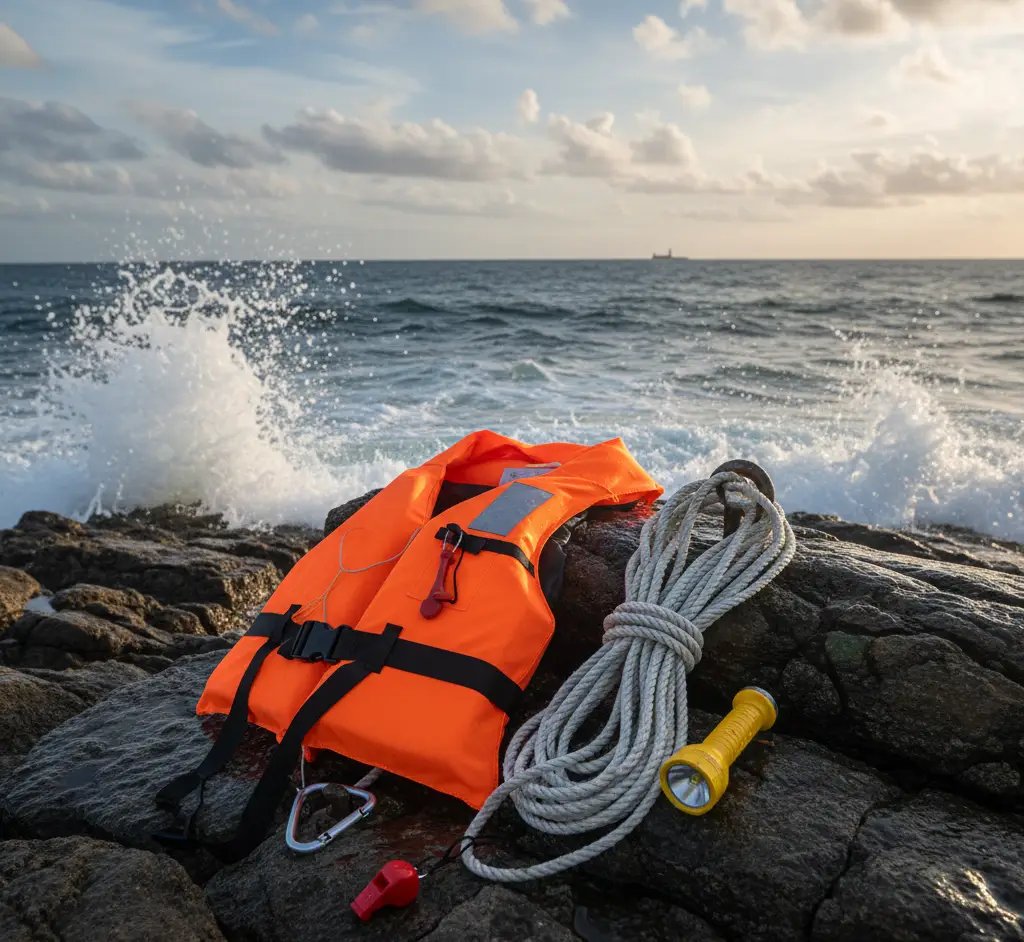
Coastal Risks in the UK
The UK coastline is stunning but unforgiving. Specific hazards include:
- Tides — paths and beaches become impassable, cutting off escape routes
- Cold water — UK sea temperatures (6–16°C) cause cold water shock in seconds
- Cliff instability — erosion causes rockfalls and collapses
- Rogue waves — especially on exposed Atlantic coasts
- Isolation — many coastal areas have no mobile signal
Coastal-Specific Kit
Navigation & Communication
- Tide tables — printed, for your specific area. Check before every walk
- Waterproof phone case — Aquapac or similar (~£15)
- Whistle — six blasts for emergency, visible on your chest strap
- PLB (Personal Locator Beacon) for remote sections — Ocean Signal RescueMe PLB1 (~£200)
- VHF radio for water activities — Channel 16 for emergencies
Safety
- Bright-coloured clothing — makes you visible to Coastguard helicopter and RNLI
- Throw line — 15m throwable rope in a bag (~£15)
- Dry bag — for keeping phone, wallet and spare clothes dry
- Emergency blanket — cold water exposure causes hypothermia rapidly
Water-Specific
- Buoyancy aid if near water — NRS Ninja (~£60)
- Wetsuit/drysuit for water activities
- Water shoes for rocky sections
- Sun protection — coastal reflection intensifies UV
Emergency Contacts for Coastal Areas
- Coastguard: 999, ask for Coastguard
- RNLI: 999 (same route via Coastguard)
- Flare signals: Red = distress, Orange = emergency
Tide Safety
This is the single most important coastal safety skill:
- Check tide times before you set out — magicseaweed.com, tides.admiralty.co.uk
- Know your route — will any sections be cut off at high tide?
- Time your walk — start 2 hours before low tide for maximum beach walking
- Watch for incoming tide — it moves faster than you think, especially on flat beaches
- Never try to outrun a tide — head inland immediately if cut off
Recommended Products
Lifesystems Waterproof First Aid Kit
Amazon UK200g
Fully waterproof
25+
Pros
- +Fully waterproof pouch essential for coast
- +Good basic contents
- +Compact
Cons
- −Basic components
- −Limited wound care
The first aid kit designed for wet coastal conditions.
View dealAffiliate link — we may earn a small commission at no extra cost to you
ACR ResQLink View PLB
Amazon UK142g
406 MHz satellite
24+ hours
Built-in
Pros
- +Direct satellite SOS anywhere
- +GPS pinpoints location
- +No subscription needed
Cons
- −Expensive
- −Single use then return for service
The ultimate safety device for remote coastal activities where mobile signal fails.
View dealAffiliate link — we may earn a small commission at no extra cost to you
Coastal-Specific Risks
Coastal emergencies differ from mountain ones: tidal cuts, rip currents, cliff falls, cold water immersion, and sunburn/heatstroke. Your kit needs to reflect these risks. A coastal kit should include: waterproof first aid, sun protection, emergency whistle, phone in waterproof case, tide tables, and warm layers (wind chill on coasts is severe).
Cold Water Immersion
UK sea temperatures range from 6-16C. Immersion in water below 15C triggers cold water shock (gasping reflex) within seconds. If someone enters the water unexpectedly: call 999 immediately, throw them something that floats, do NOT enter the water yourself unless trained. The RNLI motto: Float to Live.
Kit Organisation
A well-organised kit is usable in a hurry. Use colour-coded dry bags or labelled compartments so you can find what you need quickly, especially in emergencies where stress reduces your ability to think clearly. Practice locating items in your kit in the dark — you may need to use it at night during a power cut or emergency.
Regular Testing
Every item in your kit should be tested periodically. Torches need battery checks. Food needs rotation before expiry. Medications need expiry date verification. Water containers need cleaning. First aid supplies need replenishing after use. Set a calendar reminder every 6 months to audit your kit.
Scaling Your Kit
Start with the essentials and build up over time. You do not need to buy everything at once. The core of any emergency kit — water, food, warmth, light, first aid — can be assembled for under 50 pounds using items from Decathlon, Poundland, and your existing wardrobe. Add specialist items as budget allows. A basic kit today is infinitely better than a perfect kit you never get around to building.
Sharing Knowledge
Once you have built your kit, encourage family members and friends to do the same. Share what you have learned about practical preparedness. The UK government recommends every household should be able to sustain itself for 72 hours without external assistance. Most households are not prepared for even 24 hours. Be the exception.
Ready to gear up?
Use our kit builder to get a complete packout list tailored to your trip type, terrain, and budget — with prices and buy links.