This page contains affiliate links. If you purchase through them we may earn a small commission at no extra cost to you. Learn more
Best Camping Shelters for UK Outdoor Adventures 2026
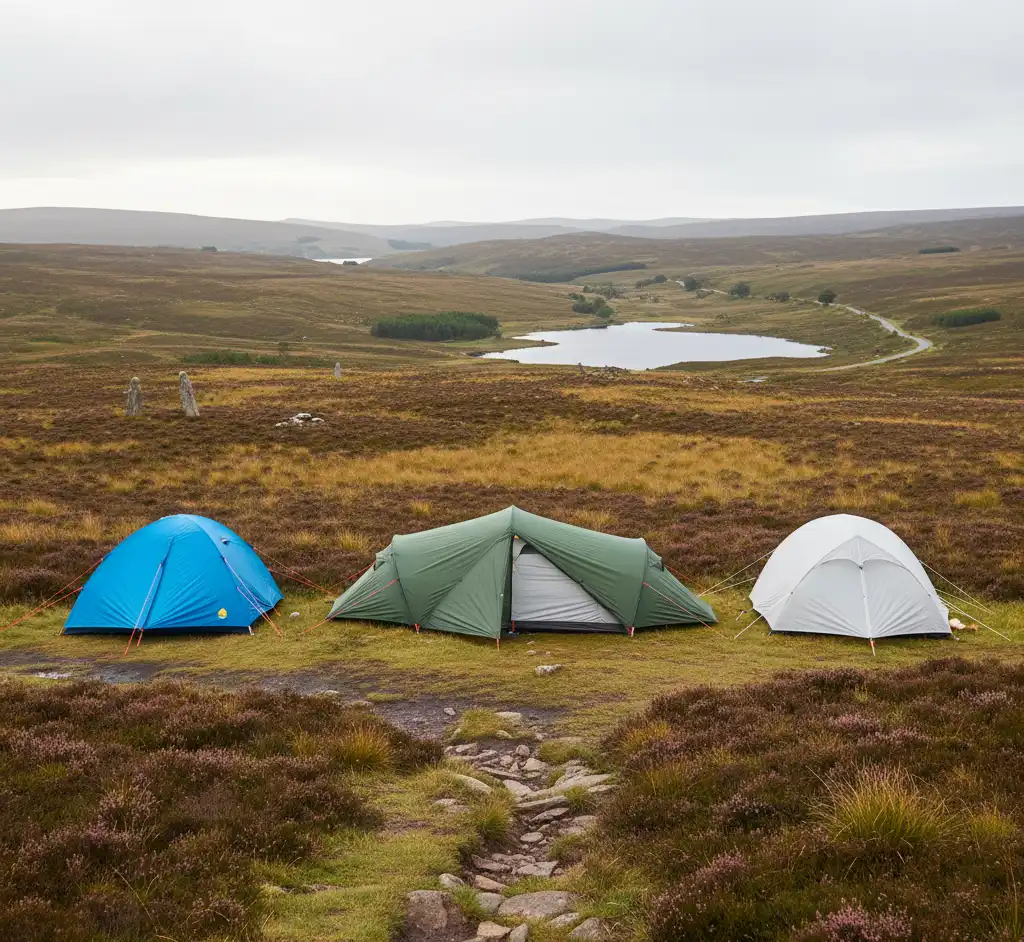
Picking the Right Shelter for UK Conditions
Let's be honest — the UK will throw rain, wind and midges at you, often all at once. Your shelter is the single most important bit of kit you'll buy, so it's worth getting right.
We've camped in everything from cheap pop-ups to expedition-grade mountain tents, across Dartmoor, Snowdonia, the Highlands and the Lake District. The difference between a good shelter and a poor one becomes painfully obvious at 3am when the wind picks up and the rain hammers down. Invest here.
The three main options are:
- Tents — most protection, most weight, most comfort
- Tarps — lightest, most versatile, least weather protection
- Bivvy bags — minimalist, great for wild camping, not for everyone
Which you pick depends on where you camp, how far you walk, and how much weather you're willing to tolerate.
What to Look For
Hydrostatic head (HH): This measures waterproofness. For UK camping, you want at least 3,000mm HH on the flysheet and 5,000mm+ on the groundsheet. Anything less and you'll wake up damp after heavy rain. Some budget tents claim 2,000mm which is technically "waterproof" but won't handle sustained Welsh rain.
Weight vs. packability: If you're backpacking, every gram counts. If you're car camping, buy comfort instead. A general rule: sub-2kg for solo backpacking, sub-3kg for two-person backpacking, and who cares for car camping.
Ventilation: Double-skin tents with good vents massively reduce condensation. Single-skin shelters are lighter but wetter inside. Condensation is the UK camper's constant enemy — even the best tents will have some on cold, humid nights.
Wind resistance: Low-profile geodesic designs handle exposed sites best. Tall tunnel tents are roomier but catch the wind. If you camp on exposed moorland or mountain summits, this matters enormously.
Porch space: Often overlooked. A decent porch lets you cook in the rain (with ventilation), store boots and wet gear, and get in and out without soaking your sleeping area. For UK camping, porch space is almost as important as sleeping space.
Our Top Picks with Full Specs
Vango Nevis 200
Amazon UK2.5kg
3,000mm
6,000mm
2 person
Pros
- +Proven UK waterproofing
- +Good porch for cooking
- +Vango build quality at entry price
Cons
- −Heavy for solo backpacking
- −Condensation in the inner on cold nights
The tent we recommend to everyone starting out. It won't let you down in British weather.
View dealAffiliate link — we may earn a small commission at no extra cost to you
OEX Phoxx 1 V2
Amazon UK1.75kg
3,000mm
5,000mm
1 person
Pros
- +Excellent weight-to-price ratio
- +Genuinely waterproof in sustained rain
- +Packs small enough for any rucksack
Cons
- −Tight for taller campers over 6ft
- −Porch is functional but cramped
The best-value backpacking tent in the UK. Full stop.
View dealAffiliate link — we may earn a small commission at no extra cost to you
Terra Nova Laser Compact 2
Amazon UK1.35kg
5,000mm
10,000mm
2 person
Pros
- +Ultralight at 1.35kg
- +Bombproof waterproofing
- +Proven in extreme UK mountain conditions
Cons
- −Expensive
- −Tight interior for two large adults
The gold standard for serious UK backpacking. Buy once, use for a decade.
View dealAffiliate link — we may earn a small commission at no extra cost to you
Alpkit Hunka XL
Amazon UK410g
Breathable top, WP base
1 person
20 x 10cm
Pros
- +Brilliant entry-level bivvy
- +Lightweight and compact
- +British-designed for UK conditions
Cons
- −Not fully waterproof in sustained rain
- −No bug mesh or zip
The gateway bivvy. Get one, try a night out, and decide if minimalist camping is for you.
View dealAffiliate link — we may earn a small commission at no extra cost to you
Tents vs. Tarps vs. Bivvies — Which Should You Choose?
| Feature | Tent | Tarp | Bivvy |
|---|---|---|---|
| Weather protection | Excellent | Moderate | Good |
| Weight | 1.3–3kg | 300g–1kg | 300–800g |
| Comfort | Best | Least | Middle |
| Setup time | 5–15 min | 5–20 min | 1 min |
| Bug protection | Yes | No | Some |
| Best for | Most camping | Woodland/fair weather | Wild camping |
| Condensation | Low (double-skin) | None | Significant |
| Privacy | Good | None | None |
Seasonal Considerations
Spring (March–May): Three-season tent minimum. Temperatures can drop below freezing at altitude. Wind can be severe on exposed sites. Budget tents cope fine in spring valleys but struggle on mountain summits.
Summer (June–August): Almost anything works. Midges in Scotland make bug-proof shelters essential from June to September. A tarp without a bug net in the Highlands in July is a miserable experience.
Autumn (September–November): Strong winds and heavy rain. This is where cheap tents show their weaknesses. If you camp regularly in autumn, invest in a tent with good wind resistance and a solid HH rating.
Winter (December–February): Four-season tents or mountain-grade three-season tents only. Snow loading, extreme wind, and sub-zero temperatures test every component. Budget tents aren't designed for this.

Affiliate partner
Camping World UK
Camping World UK — outdoor & camping gear
Our Honest Advice
If you're just getting into camping, buy a tent. A Vango Nevis or OEX Phoxx will serve you brilliantly for years. Tarps and bivvies are fantastic once you know what you're doing, but they're not forgiving if you get caught out in proper weather without experience.
If you're wild camping regularly and want to go lighter, a bivvy bag paired with a small tarp is an excellent combination — lighter than most tents and much more versatile. The classic setup: Alpkit Hunka XL bivvy + DD 3x3 tarp = under 1.2kg for a complete shelter system.
And whatever you buy — test it in your garden before heading to the hills. Nothing worse than discovering a broken zip at 2am in the rain on Dartmoor. Pitch it, guy it out, sleep in it. Know your shelter before you depend on it.
Ready to gear up?
Use our kit builder to get a complete packout list tailored to your trip type, terrain, and budget — with prices and buy links.